
(by Pam Hunt)
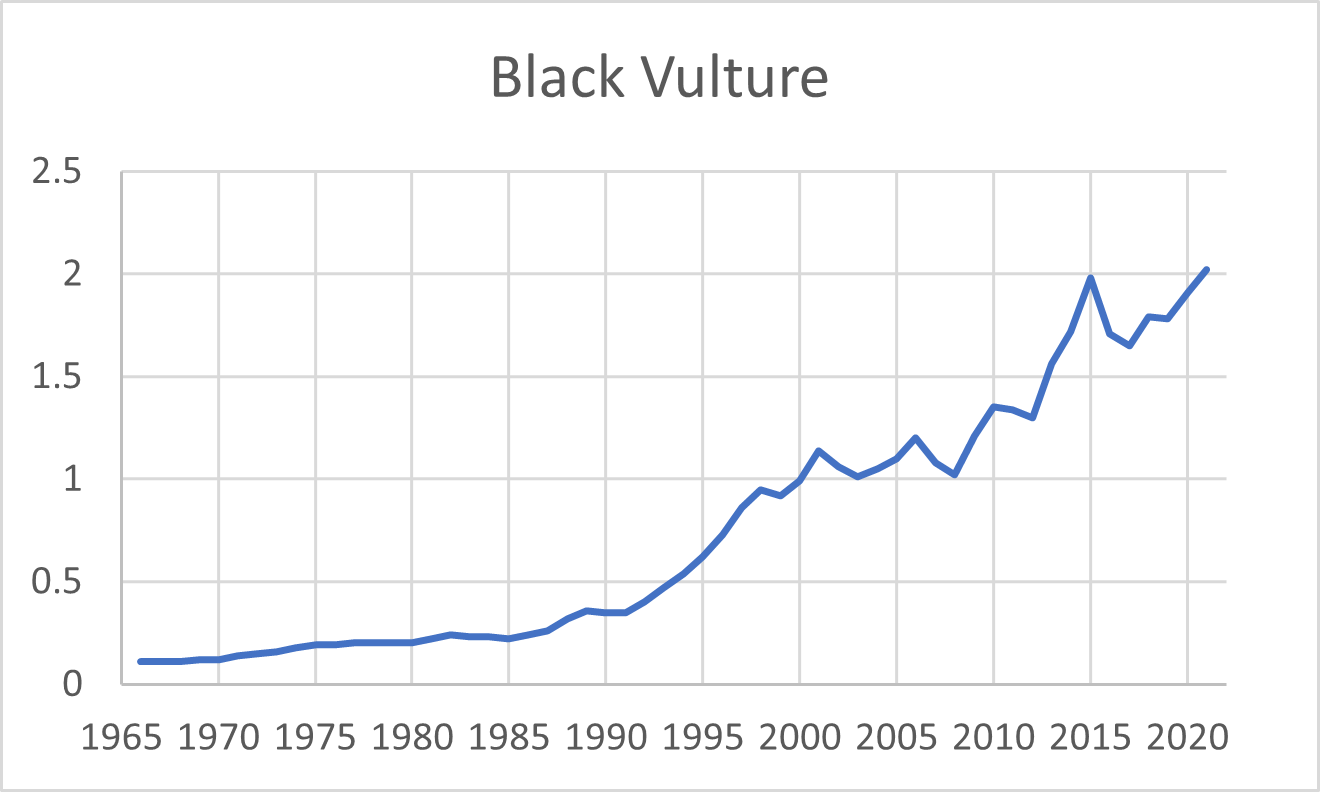
The Black Vulture is a relatively new addition to New Hampshire’s avifauna. It is common across all of Latin America and the southeastern United States, and in the late 20th century began to expand northward, reaching southern New England by the 1980s. Now it is reliably found in small numbers in parts of southern New Hampshire, particularly in the Connecticut River Valley. Although breeding has yet to be confirmed in the Granite State, vulture nests are notoriously difficult to find and it’s likely this species is nesting in rocky outcrops somewhere along the Connecticut River, or perhaps in the Pawtuckaway area. As the climate has warmed, it’s even become more common in the winter, when it joins Turkey Vultures in their evening roosts near the Seacoast.
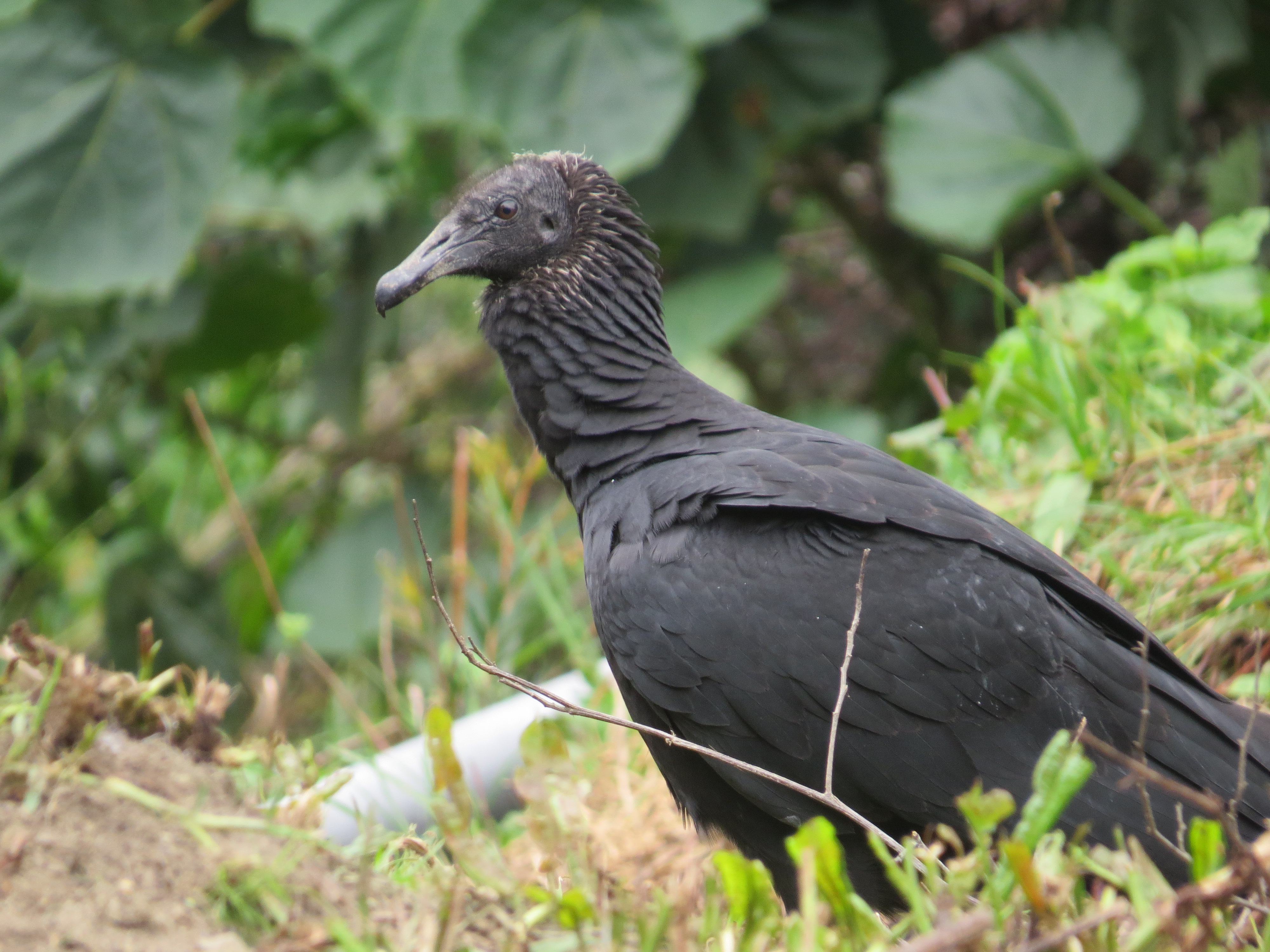
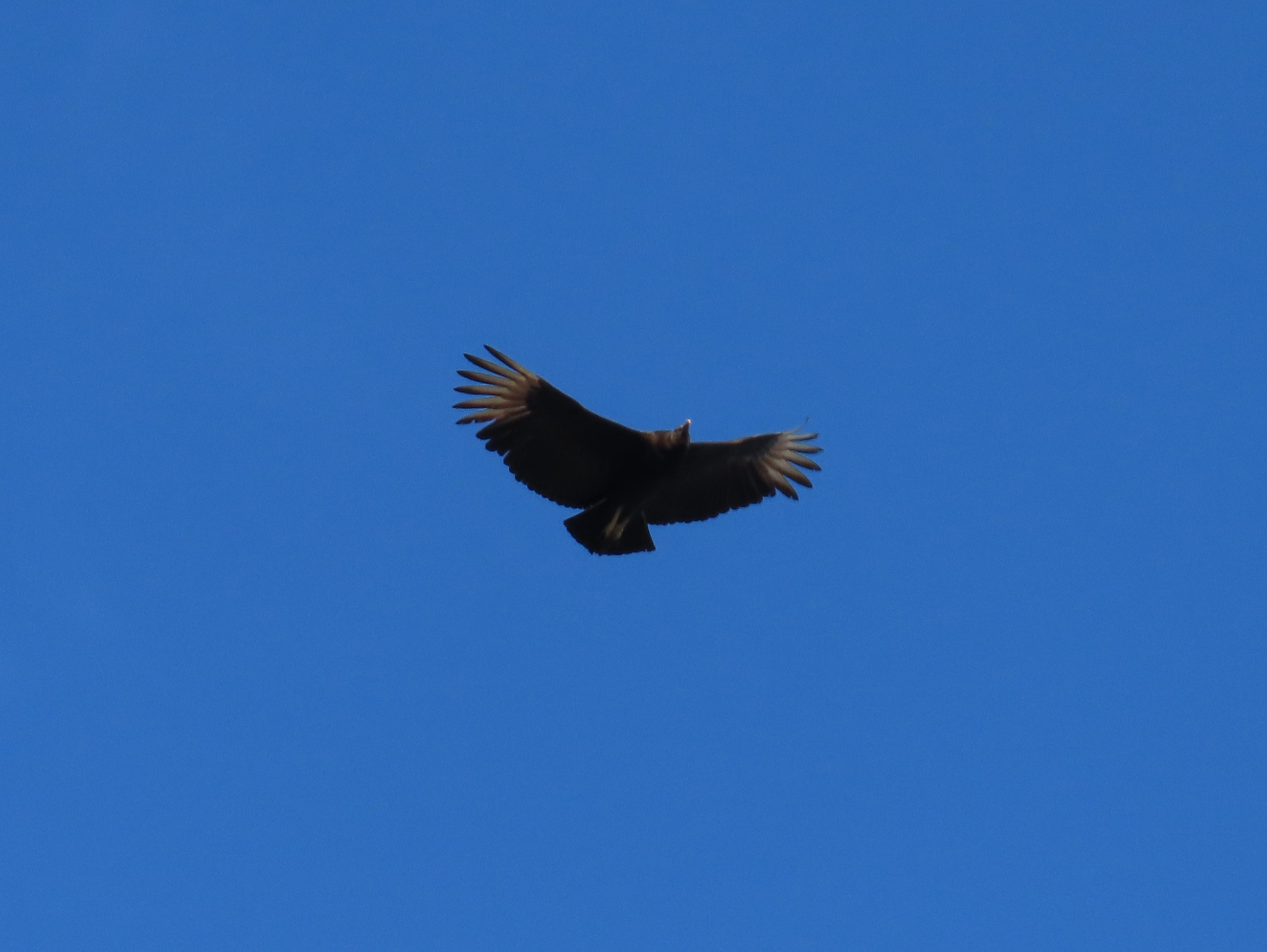 Black Vultures are most likely to be found in the company of the more common Turkey Vulture, especially at roost sites and in kettles soaring overhead. They are readily distinguished by a combination of shorter tails, black (vs. dark brown) plumage, and distinctive white patches in the wings. Their gray unfeathered heads are also distinctive but note that young Turkey Vultures also have gray heads and will take several months to acquire their characteristic pinkish-red coloration. In flight, Black Vultures don’t show the broad V-shaped “dihedral” wing shape of Turkey Vultures and typically flap a lot more often.
Unlike Turkey Vultures, Black Vultures have a poor sense of smell and rely on sight to locate the carcasses on which they feed. They often follow their more keen-scented relatives to a food source, and sometimes even displace them through sheer force of numbers (but not in New England just yet!). This aggressive streak in the Black Vulture sometimes results in conflicts with people when the vultures take an interest in live prey such as newly born livestock. Such conflicts with human interests may be on the increase but are unlikely to be an issue in New England given low population numbers. Black Vultures in parts of the south also have a bizarre habit of eating rubber from things like windshield wipers and car window seals and can be pests in this regard in places like Everglades National Park. No one is really sure why the birds do this, and in some areas they’ve also added asphalt roofing tiles to their diet.
If you’re interested in some breaking news about Black Vultures, watch for a new story on NH Audubon’s Joy of Birding website later this month. Better yet, sign up for notifications of new content at joyofbirding.nhaudubon.org.
 State of the Birds at a Glance:
- Habitat: Developed Areas, Rocky and Alpine
- Migration: Variable (more migratory in north)
- Population trend: Strongly increasing
- Threats: Disease (avian flu)
- Conservation actions: None identified
More information on “The State of New Hampshire’s Birds” is available here. Full species profiles in the format of “Bird of the Month” are now available here.