
This is New Hampshire Audubon’s Rare Bird Alert for Monday, August 3, 2026.
37 RED-NECKED PHALAROPES were seen at Jeffrey’s Ledge on August 1st, and 22 were seen there on August 2nd.
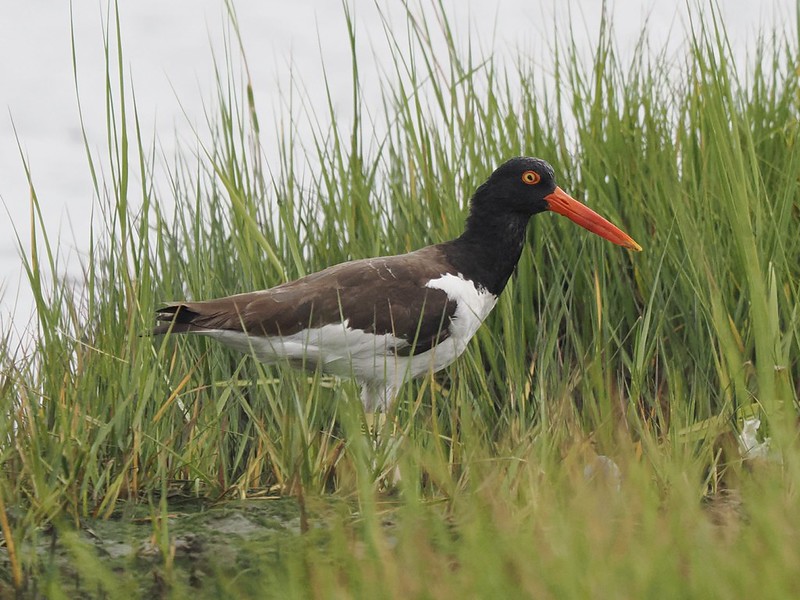
2 AMERICAN OYSTERCATCHERS were seen flying offshore from Odiorne Point State Park in Rye on August 1st.
A HUDSONIAN GODWIT was seen at Meadow Pond in Hampton on July 27th and 29th. A STILT SANDPIPER was seen from Marsh Pond Road in Rye on August 2nd.
A SANDERLING and a BONAPARTE’S GULL were seen at Moore Reservoir in Littleton on July 30th.
A PECTORAL SANDPIPER was seen at the Rochester Wastewater Treatment Plant on July 24th. The treatment plant is gated and the hours of operation are 7:30-2:00 on weekdays only. If you visit, please be out of the plant by 1:45 so that plant personnel do not have to ask birders to leave. Do not drive on the dikes and do not block the road. The Trails at Pickering Ponds, located east of the plant, are not gated, and are always open during daylight hours.
An ATLANTIC PUFFIN was seen at the Isles of Shoals on July 29th.
An ARCTIC TERN was reported from Hampton Harbor on July 31st.
The continuing BRIDLED TERN was not reported during the past week, but may still be present at the Isles of Shoals.
An AMERICAN COOT was seen at Pleasant Lake in New London on August 1st.
A LITTLE BLUE HERON was seen in the Parson’s Creek salt marsh located west of Route 1A and across from Wallis Sands State Beach.
3 SNOWY EGRETS were seen at Adams Point WMA in Durham on July 30th, 1 was seen at Jackson’s Landing in Durham on the 30th and 1 was seen at the Pickering Ponds in Rochester on the 28th.
A RED-NECKED GREBE was seen along the coast in Rye on July 31st.
A LONG-TAILED DUCK was seen in Hampton Harbor on July 30th.
Nesting MISSISSIPPI KITES continued to be reported from Woodridge Park in Durham during the past week, and were last reported on August 1st.
2 SANDHILL CRANES were seen in fields along Plains Road in Monroe, and 3 were seen in fields in East Conway, all on August 2nd.
A YELLOW-THROATED WARBLER was reported from Alton Bay on July 27th. The observer provided this detailed description: ‘This bird had a yellow throat with two wing bars, a fairly prominent white eye brow along with a noticeable white eye crescent and black ear patches.”
A RED-HEADED WOODPECKER was seen on Poor Farm Road in Weare on August 1st.
An ORCHARD ORIOLE and a GRASSHOPPER SPARROW were seen at Arboretum Drive across from Pease International Tradeport on August 2nd.
A WILLOW FLYCATCHER was seen at the Upper Coos Recreational Trail in Colebrook on July 29th.
11 PURPLE MARTINS were seen on private property in Lee on July 31st.
A BLUE-GRAY GNATCATCHER was seen at Bush Street in Marlborough on August 2nd.
A FISH CROW was heard and seen at Plymouth State University on July 24th.
An archive of rare bird alerts is available at nhaudubon.org/rba. If you have seen any rare birds recently you can leave a voicemail at (603) 224-9909, following the prompts on how to report a rare bird. You can also send your sightings via email to birdsetc@nhaudubon.org. Please put “Rare Bird” in the subject line and include the location of the sighting and your phone number.
What is the Rare Bird Alert?
The New Hampshire Rare Bird Alert is a list of birds that is posted, usually on a weekly basis on NH Audubon’s website, and several public websites. The primary goal of the list is to help bird watchers find uncommon or rare birds that occur within the geographical boundaries of NH.
What makes a bird rare?
A bird may be considered rare if it’s outside its usual range, present at an unusual time of year, or found in an unexpected part of the state. For example, a Red-bellied Woodpecker in southern NH is expected, but one in Coos County would be unusual. A Black-throated Blue Warbler in summer is normal but in winter it would be rare. While a Roseate Spoonbill would be rare in any season. To learn more, read “So You Think You Found a Rare Bird? A Quick Guide to What Counts and How to Report It” on the Joy of Birding.
Available NOW:
Birding Northern New Hampshire by Robert A. Quinn
Boreal birds and dramatic vistas await you most any time of the year in New Hampshire’s North Country. Follow birder and naturalist Robert A. Quinn’s detailed new guide, Birding Northern New Hampshire, to the best birding in northern Coos County. All proceeds go to NH Audubon. For more info and to order a copy, check out this link.
Thanks very much and good birding.