
(by Pam Hunt)
The bright black and orange Baltimore Oriole is favorite bird of many backyard birders, and one of the few songbirds adopted by a professional sports team. The name comes not from the city in Maryland, but from the city’s namesake colonial nobility, whose colors were black and orange. In other words, there are several oriole species that could have been so named, but only one in eastern North America where Lord Baltimore established the colony of Maryland.
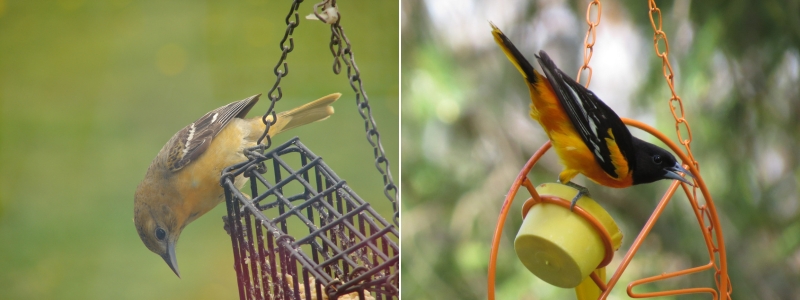
History aside, Baltimore Orioles are part of the spring wave of colorful migrants that return to New Hampshire each May. Arriving before the leaves are fully out, they are often seen feeding at flowers of trees like cherries and crabapples, where they consume both insects and nectar. At this time of year, they are also attracted to oranges and jelly placed out for them at bird feeders. As the breeding season progresses, they shift to an insectivorous diet and feed their young exclusively invertebrate prey. In the fall fruit becomes a staple and continues as the core of the diet through the winter. In some parts of their winter range in Central America they can cause damage to local fruit crops.
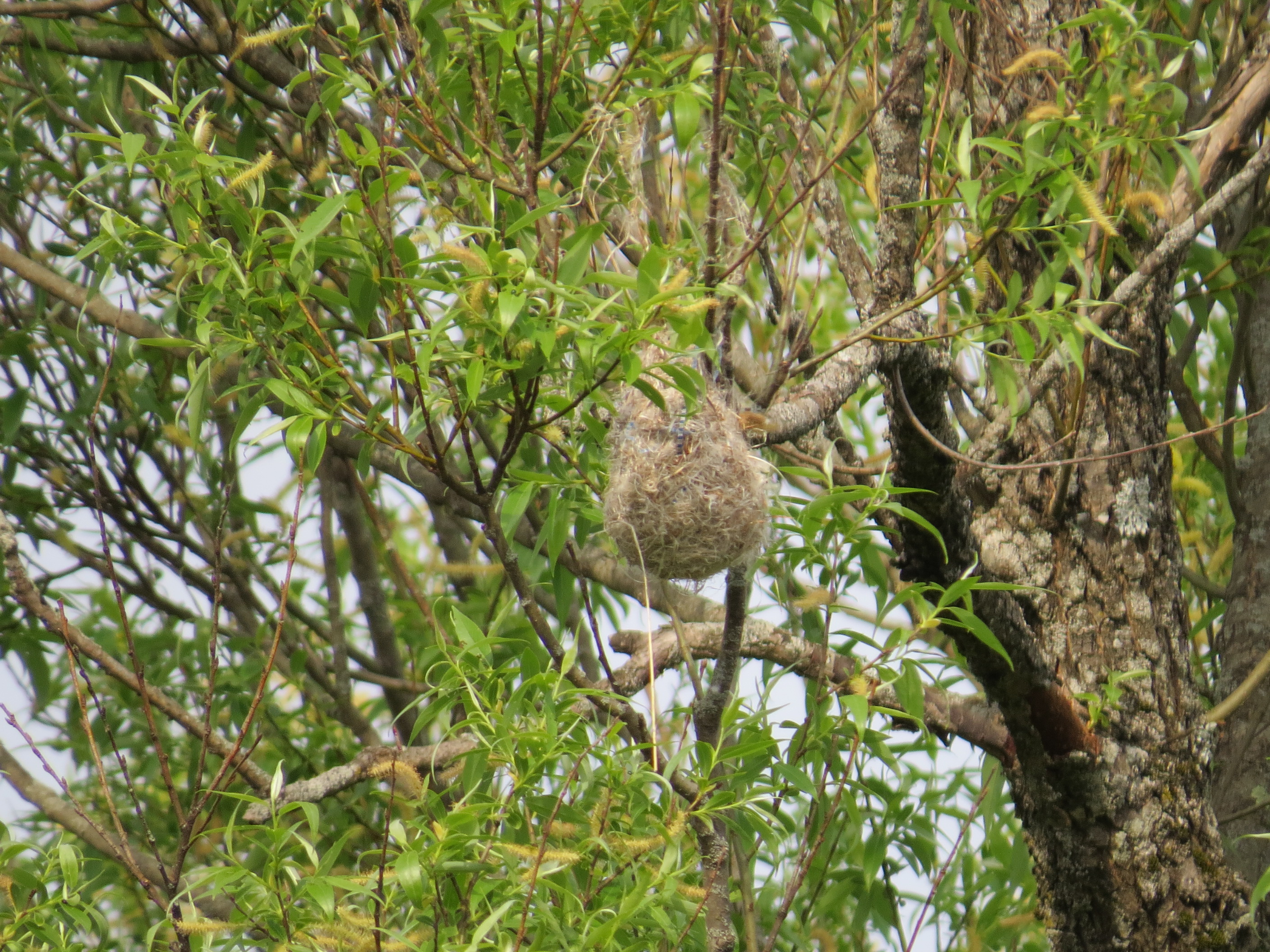 Oriole nests are amazing feats of avian construction. Built entirely by the female, these hanging pouch-like structures are woven starting from the top, where the initial strands of bark and other fibers serve to anchor the early nest to a horizontal fork. The bird then works her way down, adding strands until the nest is 3-5 inches deep and expanded at the bottom to accommodate the incubating female and her 4-6 eggs. Hard to see among the leaves during the summer, these nests are quite conspicuous in winter, leading many to realize they had nesting orioles in their neighborhood without even knowing it.
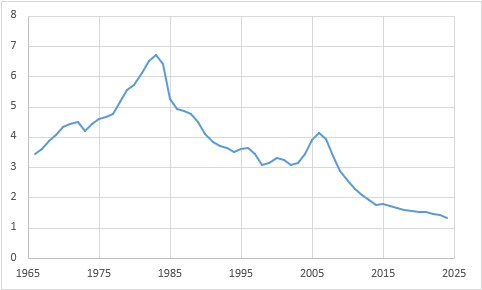
Despite their ability to thrive in human-altered landscapes, Baltimore Orioles have been in decline since the 1980’s (Figure 1). Some of this has been attributed to pesticides, with records of direct mortality in the species dating back to the DDT era in the 1950s. Even now there are accounts of orioles being absent from previously-occupied habitat after spraying, and the effects are likely some combination of poisoning and the reduction in prey supplies. It’s also likely that habitat loss to agriculture in Central America has additional negative effects.
State of the Birds at a Glance:
- Habitat: Developed Areas, Hardwood-mixed Forests, Shrublands
- Migration: Medium Distance
- Population trend: Strongly decreasing
- Threats: Habitat loss and fragmentation, Predation, Collisions, Pesticides
- Conservation actions: Maintain a bird-friendly yard
More information on “The State of New Hampshire’s Birds” is available here. Full species profiles in the format of “Bird of the Month” are now available here.