
(by Lindsay Herlihy)
NH Audubon’s sixth Pocket Pollinator Garden has been successfully installed at Manchester High School West. Combined with four other gardens in Manchester (including Beech Street Elementary, Manchester City Library, Mill 3, and Bakersville Elementary), these beautiful pockets of native flowering plants provide crucial habitat for beneficial native insect species. From forests and meadows to working farms and backyard gardens, native insect pollinators are responsible for maintaining healthy ecosystems by facilitating plant reproduction. Unfortunately, widespread decline of insect pollinators is raising concerns within scientific, conservation, and agricultural communities. Urban areas especially tend to have limited habitat available for native pollinators. This is precisely why NH Audubon is coordinating efforts in Manchester to restore urban green spaces and support declining pollinator populations.
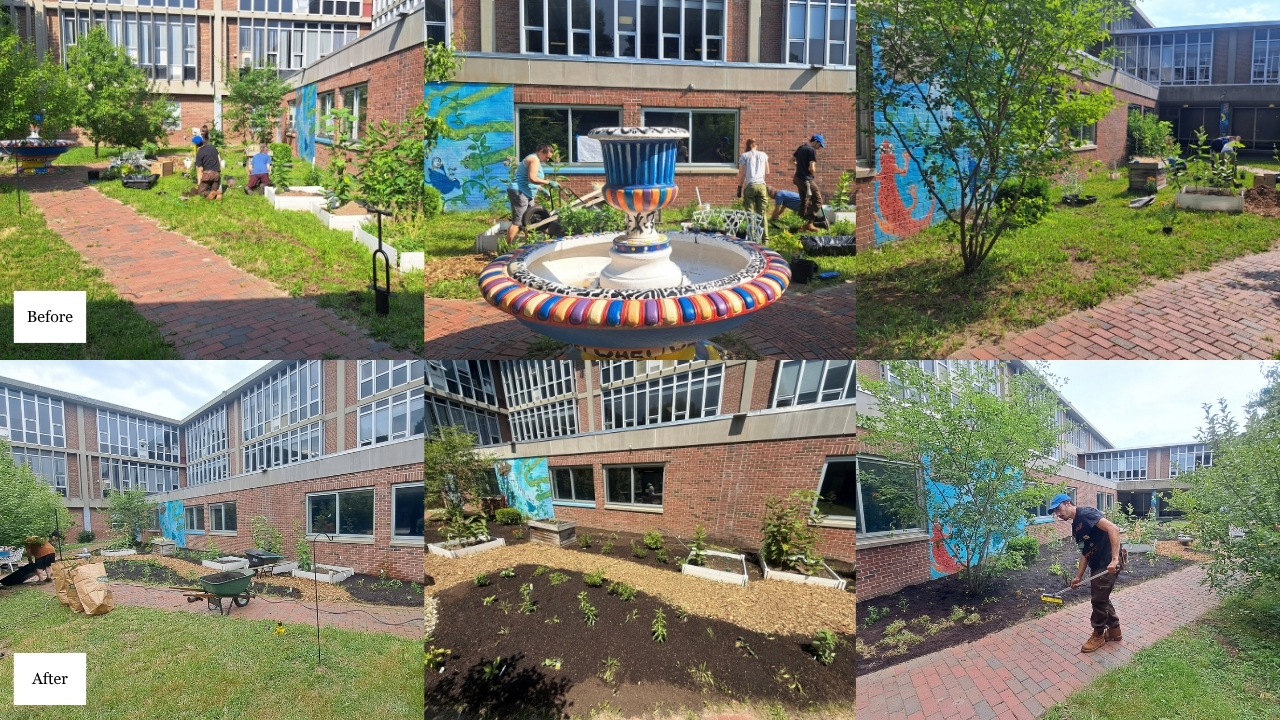
Selecting native plant species and designing the custom garden layout was a team effort between the dedicated volunteer members of the Pocket Pollinator Garden Club and NH Audubon staff. All plants were purchased from local nurseries or donated from private native gardens, ensuring the ecological compatibility necessary to preserve the relationships between native plants and pollinators. Planting native species from the same ecoregion is important because these plants have adapted to local conditions and coevolved with local wildlife over millions of years. The highly specific, mutually beneficial relationships forged though coevolution cannot be replicated by nonnative or regionally mismatched plants.
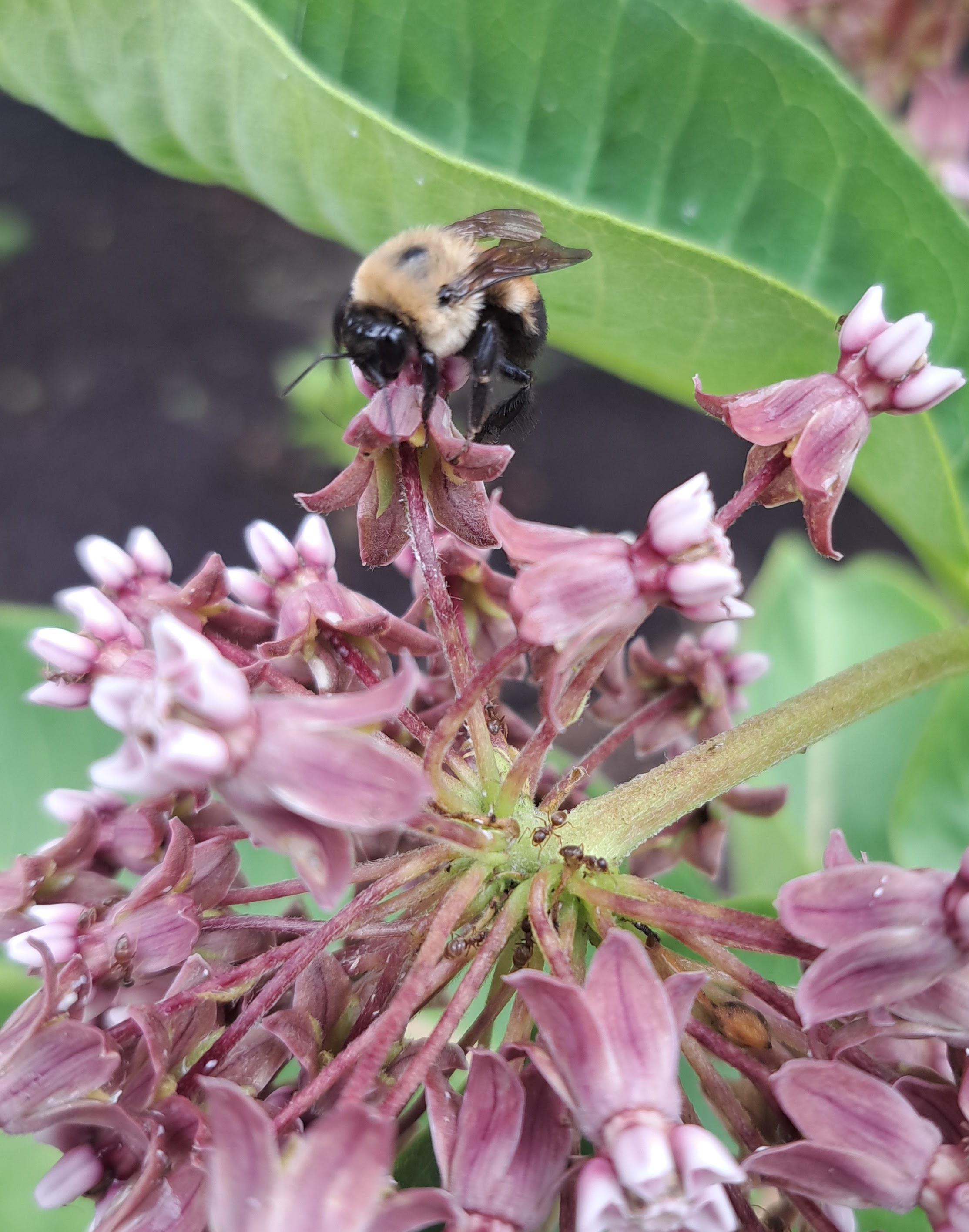 Starting on June 30th, a team of seven community volunteers and three NH Audubon staff members began the process of garden installation inside the central courtyard of West High School. After loosening the existing soil and blocking out the shape of a walking path, our hardworking team dived into smaller groups to tackle planting, nonnative species removal, and mulching. After two and a half days of hard work, West High School’s courtyard is transformed into a pollinator oasis. Our efforts were immediately rewarded by the appearance of two native pollinator species – Brown-belted and Common Eastern Bumblebees. A walking path and pre-existing benches provide a green space for students to engage with nature through wildlife encounters along with a myriad of opportunities to include the gardens in educational programming and hands-on activities. We can’t wait to see how this beautiful new garden will be enjoyed by students, teachers, and pollinators alike!
Special thanks to the volunteer members of the Pocket Pollinator Garden Club, the enthusiastic and welcoming staff of Manchester High School West, and Fassett Farms Nursery for making the installation of the newest Pocket Pollinator Garden possible! Funding for this project was generously provided by the Norwin S. and Elizabeth N. Bean Foundation.