(Photo and article by Anita Fernandez)
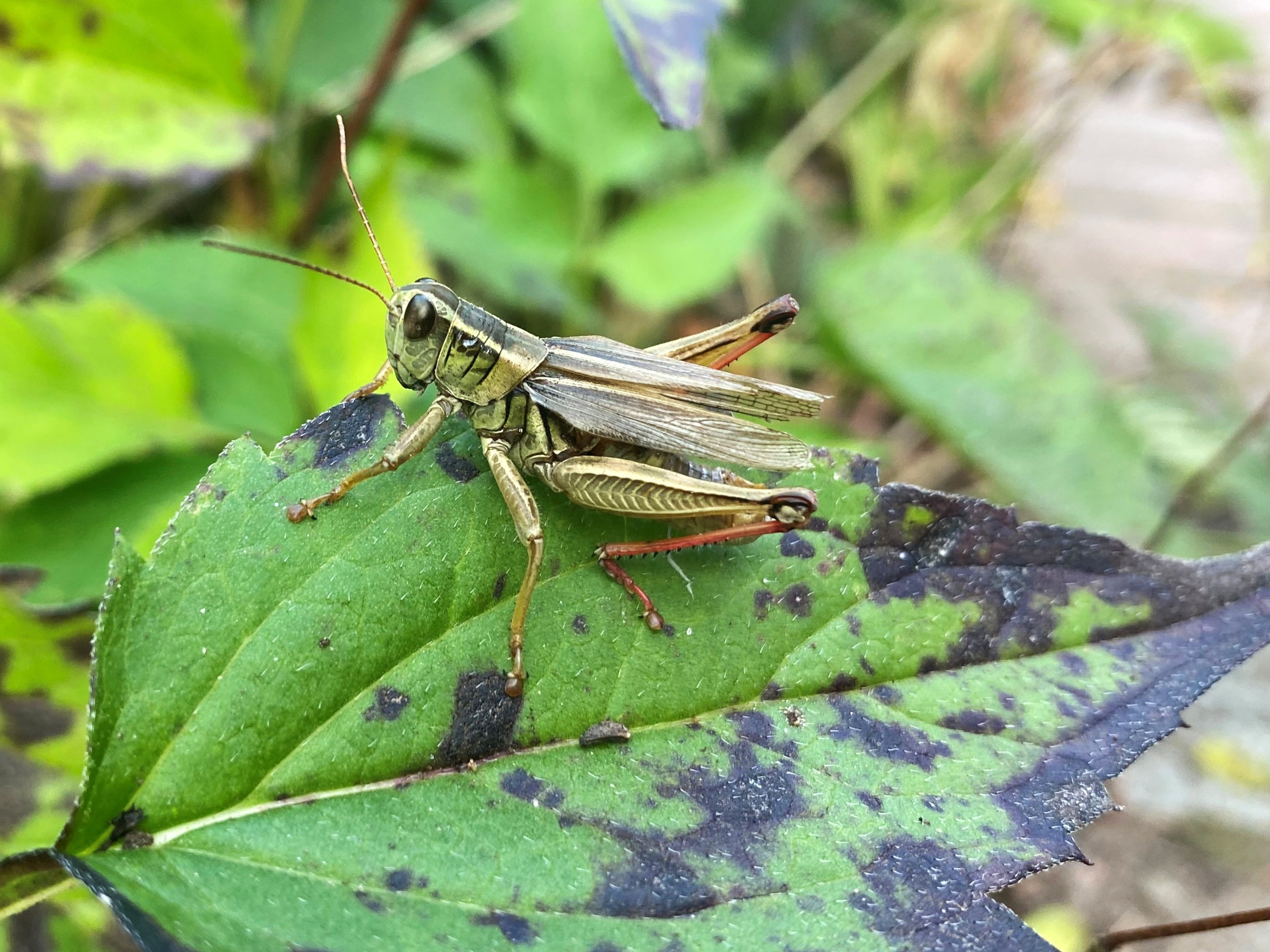
In late June we saw Carolina Grasshoppers in the McLane Center pollinator gardens, and although this grasshopper is most commonly spotted in late summer, it can also be seen into the fall. This is the Two-striped Grasshopper, found in the McLane gardens in early October. It is a larger member of the Orthoptera order (the group of insects that includes grasshoppers, crickets, and katydids), being larger than the Red-legged grasshopper and the Short-winged grasshopper, which are both a little over an inch in length. The Two-striped Grasshopper is approximately 1 ¼” for males and up to 2 ¼” for females. They are so named for the pale stripes that run alongside their body, beginning over each eye and extending down the wing. They are a wide-ranging insect, found almost everywhere in North America except the southeast coastal areas, the arid southwest, and northern Canada and Alaska. They like the sun, but can occupy a range of habitats from lush vegetation to meadows, fields, urban gardens, roadsides, vacant lots, ditches, and crop fields. They are considered potentially detrimental in agricultural areas, as it is estimated that a group of ten adult Two-striped Grasshoppers per square yard can defoliate an entire crop. They are also considered polyphagous, meaning that they feed on a variety of plant material from grasses to seed pods, flowers, and woody plants. Some of their most interesting features are that they house their hearing organs on their abdomen, or the last of their three body segments, and they are formidable. In times of food scarcity, they will resort to cannibalism, and they are known to bite readily if handled by a human. Take photos and save your fingers!