(text and photos by Pam Hunt)
 April marks the beginning of peak songbird migration in most of New Hampshire. The first warblers are starting to trickle in, and sparrows are close to peaking, with up to ten species possible if you’re in the right mix of habitats. And unlike most warblers, sparrows regularly come to bird feeders – where you can observe them at your leisure. Given that we’re now in the latter half of April, however, you should really consider bringing your feeders in because of the risk of bears (see the last quiz!). The good news is that sparrows are quite happy feeding on the ground, so spreading some seed across your lawn will still allow you to enjoy your birds. Yes, a bear may swing by now and then as well, but it’s not going to get the food bonanza that it would from a feeder, and thus be less of a damage risk.
Among the sparrows passing through in the next couple of weeks is this week’s quiz bird. As sparrows go it’s a fairly easy one, but it IS a dull female which might make it a little trickier.
Answer below…
…
…
…
Snowbirds are still here – even if there’s no snow!
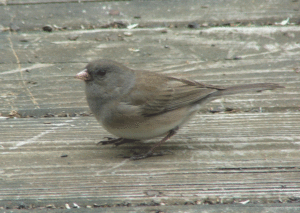
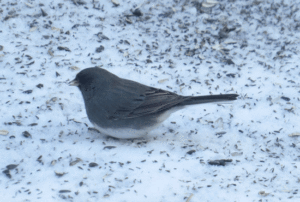 So what sparrow is grayish and lacks streaks? The Dark-eyed Junco of course, a bird sometimes colloquially known as a “snowbird” because it’s most obvious to us in winter. This female shows the species’ characteristic pink bill and gray head, but is generally a lot duller and browner than the male below. If you look closely you can see that both sexes have faint streaking on their backs – they are sparrows after all!
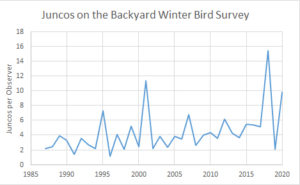
If we look at junco numbers in the winter, such as collected by NH Audubon’s Backyard Winter Bird Survey, we see an interesting pattern (graph below). The numbers tend to go up and down, with occasional obvious peaks at irregular intervals. During the junco peak back in 2001, I dug into another data source – the nationwide Christmas Bird Count – to see if this pattern was present at a larger scale. What I found was that in years with high junco numbers in the north, they were less common farther south (they migrate as far as Georgia), suggesting that they simply didn’t migrate as far in those years. Such population shifts are likely a result of variation in natural food supplies such as weed seeds, and are particularly obvious in the highly nomadic “winter finches” like crossbills and redpolls.
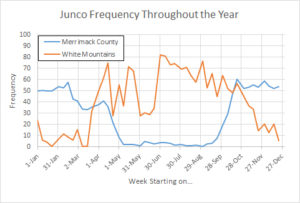
Juncos nest across the boreal forest of Canada and the northern United States, and in NH are most common in the White Mountains and north – with a few at higher elevations in the south. But in the winter they migrate to warmer climes, at which point they congregate in flocks and are a lot more obvious. The graph below shows the frequency of juncos in Merrimack County and the White Mountains over the course of a year – based on data submitted to eBird. Here you can see that they are quite common in the south from late October to early April, after which point they start thinning out as they leave for their northern breeding grounds. This pattern is reversed in the mountains, where juncos are one of the most common birds in our high-elevation conifer forests. So if you want to enjoy them in a month or so, you’ll need to go north or climb one of the higher peaks in the south.