
(Photos and story by Pam Hunt)
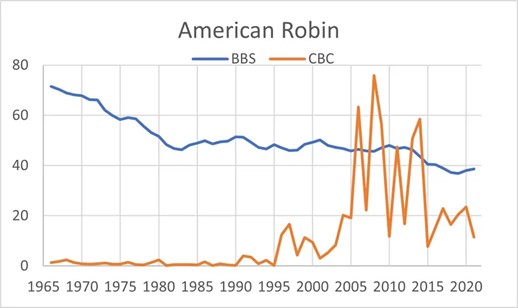
The American Robin (Turdus migratorius) is one of the most familiar birds in North America. Unlike other contenders like cardinals, bluebirds, and chickadees, it occurs across the continent from arctic Alaska to the mountains of southern Mexico. Populations north of southern Canada are migratory, and shift into the United States as winter progresses, while some in western mountainous areas move downslope into the deserts of the southwest. Here in New Hampshire, while robins have traditionally been considered a sign of spring, their abundance as an overwintering bird began to increase in the 2000s (Figure 1). They are now found year-round except in much of Coos County and the White Mountains, but spring is still heralded by arrivals from farther south and the onset of more frequent singing.
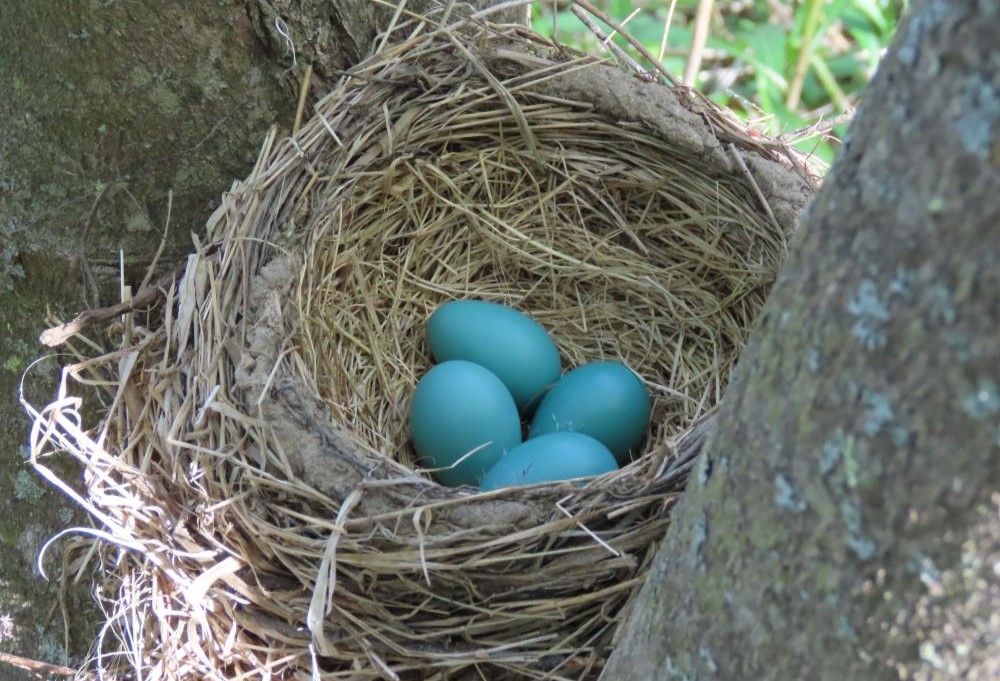
This subtle range shift is testament to the robin’s adaptability. While historically a species of forests and forest edges, robins quickly took to human-altered habitats. They are one of only a handful of birds that readily nest directly on buildings (e.g., gutters and porch lights) and even nest on the ground in some areas. Robin nests are easy to recognize by the layer of mud between the outer layer of grass and the lining of finer materials, and if in a well-sheltered space they will persist in good condition through the winter. Sometimes nests will be re-used for subsequent broods within a season. With a warming climate, robins in New Hampshire are breeding earlier and earlier, and in some parts of the state three broods are increasingly common.
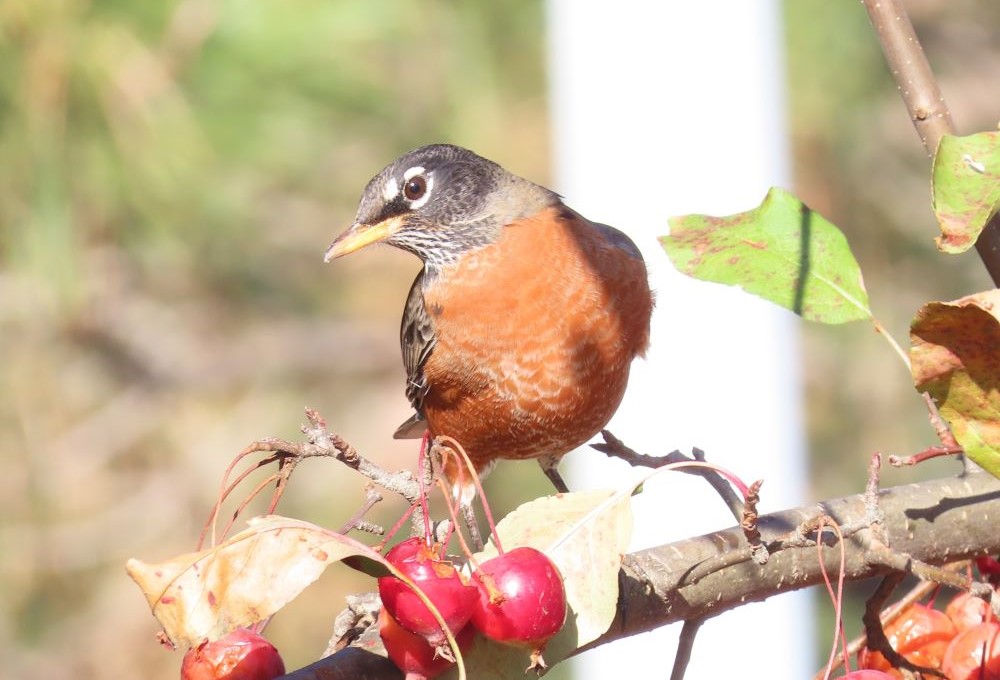
 Robins are famous for their hunting of earthworms, but these are not native to most of New England. All the earthworms we have in New Hampshire are invasive species from Europe that can have negative effects on forest ecosystems. Presumably robins foraged primarily on native insects and their larvae prior to European colonization. In fall and winter, robins shift their diet from invertebrates to fruit and form large flocks that wander across the landscape in search of native and ornamental fruiting shrubs and trees. Increases in non-native species such as crab apples may be part of the explanation for robins wintering farther north, although climate change may also be a factor. In early spring, it is not uncommon to see robins foraging along roadsides after snowstorms for food items recently exposed by plows.
 Despite their adaptability, robins have started to show signs of decline across much of their range, usually starting in the 1990s or early 2000s. Although populations in New Hampshire are stable (Figure 1), those in neighboring states and provinces have dropped by 20-40 percent since 2000 and there are no clear explanations. Habitat change is an unlikely threat, leaving us with poorly known stressors such as pesticides, disease, and maybe even invasive species. Perhaps research on a common species like the American Robin can help conservation biologists better understand these emerging threats in time to help numerous other declining bird species.
State of the Birds at a Glance:
- Habitat: Developed, Forests, Shrublands, Grasslands (for foraging)
- Migration: Short-distance
- Population trend: Stable
- Threats: Predation, collisions, additional unknown threats
- Conservation actions: Maintain a bird-friendly yard
More information on “The State of New Hampshire’s Birds” is available here. Full species profiles in the format of “Bird of the Month” are now available here.