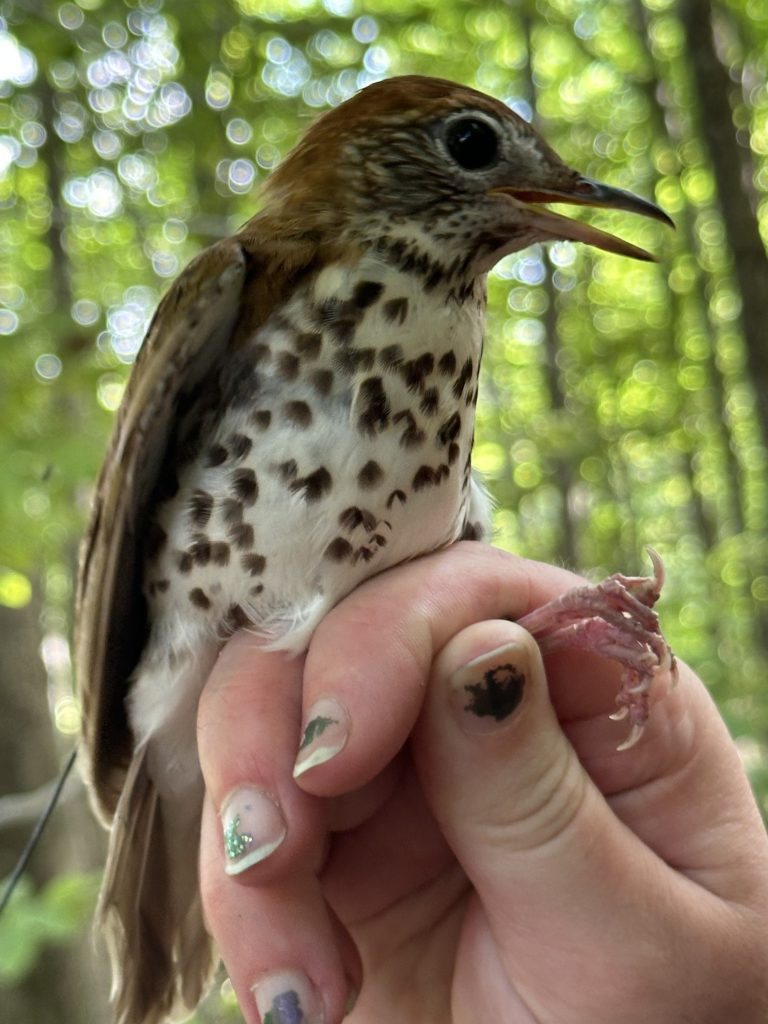
Wood Thrush Migration Update
(by Pam Hunt) 2025 was the second year that NH Audubon participated in the range-wide effort to track Wood Thrushes using the Motus Wildlife Tracking Network. The project as a


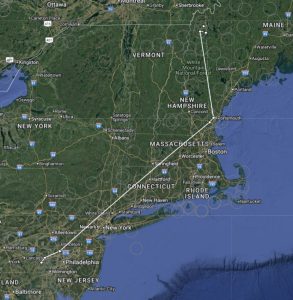 An adult female, who nested on a narrow strip of land between a heavily travelled logging road and a beaver pond in Atkinson and Gilmanton Academy, NH (not surprisingly, the nest failed), headed south on September 29, triggering two local receiving stations on the way. The stations at Great Bay and Phillips Exeter Academy detected her on October 9, and she passed three stations north and west of Philadelphia, PA on the 27th.
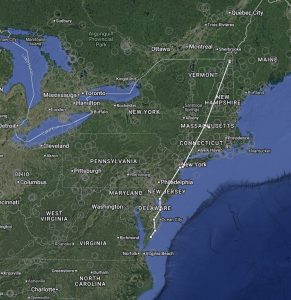 A juvenile tagged in Dixville, NH on July 15 as part of a “mob,” was last detected locally on October 1 and triggered four receiving stations from Hadley, MA to the western end on Long Island, NY on October 28, traveling at an estimated speed of 35 mph. It reached the north shore of Delaware Bay on November 11 and apparently spent several days in that area. It crossed to the Delaware shore on the 23rd and continued south along the Virginia coast, with detections at Chincoteague National Wildlife Refuge and Paramore Island.
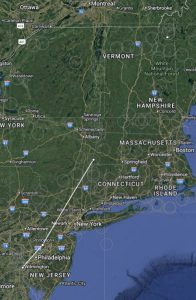 Another juvenile tagged on May 30 at its nest in Adamstown, ME started south on September 27 after 12 hand-tracked detections within the region. It triggered receiving stations in Catskill and Staatsburg, NY, on October 16; on an island in the Delaware River near Philadelphia on the 25th; and near the north end of Chesapeake Bay and the north side of the Potomac River estuary on November 7.

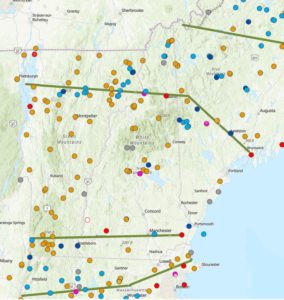
(by Pam Hunt) 2025 was the second year that NH Audubon participated in the range-wide effort to track Wood Thrushes using the Motus Wildlife Tracking Network. The project as a
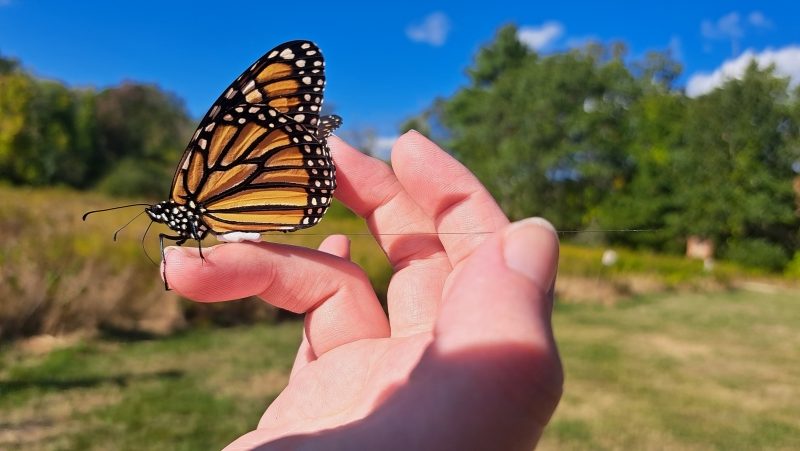
(Photos and story by Lindsay Herlihy) Monarchs are one of the most recognizable butterfly species in North America due to their large size and striking coloration. They are also unique
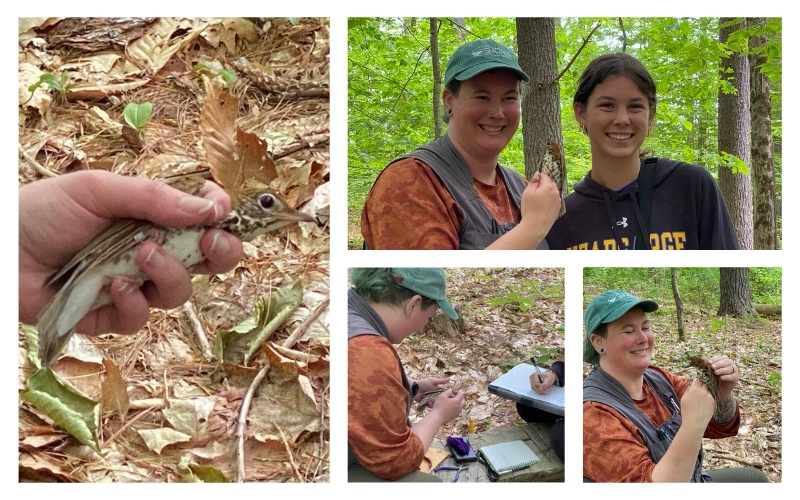
(by Pam Hunt) 2025 is the second year of the range-wide Wood Thrush tracking project coordinated by the US Fish and Wildlife Service, and NH Audubon and our partners set

New Hampshire Audubon is grateful for generous grants recently awarded from the following charitable supporters: NH Audubon received grants from the Butler Foundation and the Davis Conservation Foundation to support

(by Willa Coroka) In mid-April, forty high school students from Manchester visited the Massabesic Center for a full day of activities pertaining to our conservation efforts. These same students are

(by Pam Hunt) Now that spring migration is back in full swing, it’s time to see what happened to some of the 27 Wood Thrushes we tagged in NH in