
(Photos and story by Lindsay Herlihy)
Monarchs are one of the most recognizable butterfly species in North America due to their large size and striking coloration. They are also unique as the only species of butterfly known to undertake long-distance, multi-generational migration. Unfortunately, these formerly abundant butterflies have experienced dramatic population declines since the 1990s. To better understand and protect them, NH Audubon biologists are attaching tiny radio transmitters—called Lotek nanopins—to migrating Monarchs to track them along their migration route.

From 2022-2024, 130 Monarchs have been fitted with Lotek nanopins. In 2025, NH Audubon welcomed two collaborating biologists to join the tagging efforts: Amy O’Donnel of the US Fish and Wildlife Service in Maryland, and Dr. Micah Perkins of Owensboro Community and Technical College in Kentucky. Our combined efforts have yielded 74 tagged Monarchs during fall migration this year, bringing us to a total of 204 tags deployed! The small size of Lotek nanopins results in a short battery life of about 21 days. Through the tagging efforts of our southern collaborators, we expect our detection data to extend much further than in previous years, giving us a clearer picture of how Monarchs travel from their breeding grounds in the eastern United States to their overwintering habitat in Mexico. This work will allow NH Audubon biologists to identify areas along Monarch migration routes to enhance pollinator habitat with native wildflower plantings, providing migrating Monarchs with essential habitat to rest and refuel along their journey.
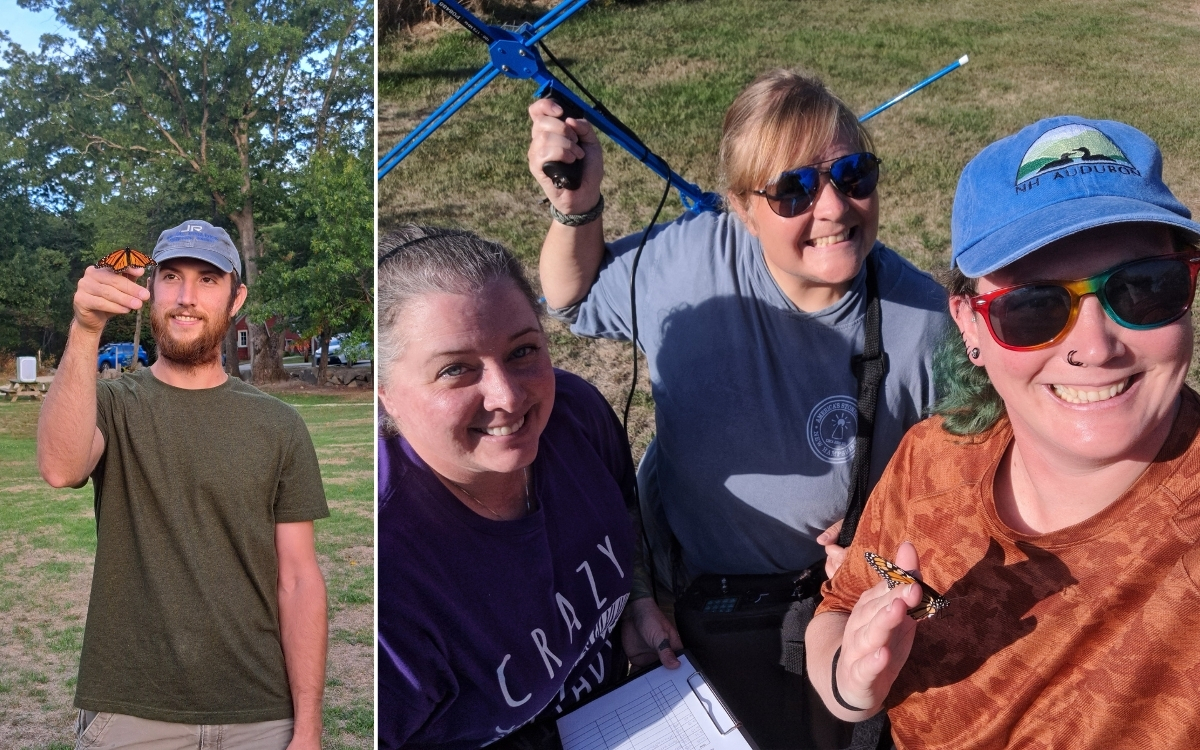
Thank you to all our wonderful volunteers who assisted with the 2025 Monarch tagging efforts! Special thanks to our new southern collaborators, Amy and Micah. We can’t wait to see where our tagged Monarchs travel!