
This is New Hampshire Audubon’s Rare Bird Alert for Monday, March 23, 2026.
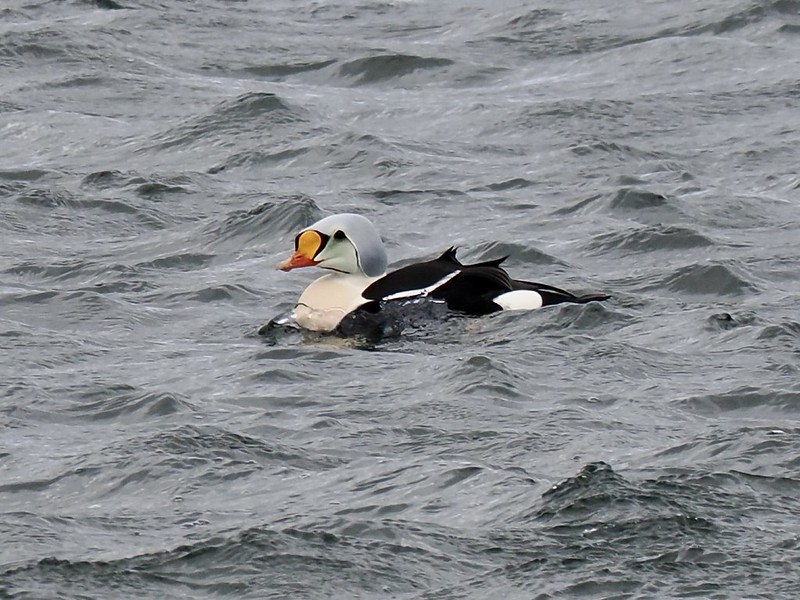
A male KING EIDER was seen at Four Tree Island and at Peirce Island in Portsmouth on March 15th-21st.
A BARNACLE GOOSE was seen at Sawyer’s Farm on River Road in Walpole on March 17th and 18th.
3-4 ROSS’S GEESE were seen at Sawyer’s Farm on River Road in Walpole on March 16th and 17th.
A CACKLING GOOSE was seen at the Wastewater Treatment Plant in Charlestown on March 17th and again on the 19th, and 2 were seen on River Road at Sawyer’s Farm in Walpole on the 19th.
25 SNOW GEESE were seen at Great Meadow–Trail South from the boat launch in Charlestown on March 18th.
A male EURASIAN WIGEON was seen at the north end of River Road in Plainfield on March 18th-22nd.
A male REDHEAD was seen at Great Meadow–Trail South from the boat launch, and at the Wastewater Treatment Plant in Charleston on March 17th-21st.
A BLUE-WINGED TEAL was seen on the Connecticut River from the Ferry Road Boat Launch in Claremont on March 20th, and 2 were seen at the Hampton Salt Marsh Conservation Area on the 19th.
A male RED-BREASTED MERGANSER was seen from Stark Landing on the Merrimack River in Manchester on March 18th.
A PIED-BILLED GREBE was seen on the Connecticut River in Charlestown on March 21st, and 1 was seen at Lake Opechee Bay in Laconia on the 16th.
5 SANDHILL CRANES were seen flying over Mountain Road in Concord on March 19th.
A GREAT EGRET was seen at Witch Island in Hampton on March 22nd.
A MERLIN was seen along Route 3 in Lancaster on March 21st.
A BLACK VULTURE was seen at Bullard Drive in Lyndeborough on March 17th, 1 was seen on Newmarket Road in Durham on the 17th, and 1 was seen at Great Meadow in Charlestown on the 20th.
An OSPREY was reported from the Merrimack River in Concord, and 1 was reported from Powder House Pond in Exeter, both on March 21st,
A NORTHERN SHRIKE was seen again at the Ines and Fredrick Yeatts Wildlife Sanctuary in Warren on March 18th.
A BALTIMORE ORIOLE continues to be seen in Kingston and was last reported on March 21st.
A flock of 30 BOHEMIAN WAXWINGS was seen at the Attitash Resort in Bartlett on March 21st.
128 EVENING GROSBEAKS were seen at a bird-feeding station in Jefferson on March 21st, and smaller scattered flocks were seen throughout the state.
A DICKCISSEL continues to be seen in Wolfeboro and was last reported on March 20th.
A flock of 6 REDPOLLS was seen in Berlin on March 21st.
A BLACK-BACKED WOODPECKER was reported from Mud Pond in Jefferson on March 20th.
A RED-BELLIED WOODPECKERS was seen at Mechanic Street in Gorham and 1 was seen on Summer Street in Lancaster, both on March 22nd.
An AMERICAN PIPIT was seen in Durham on the 22nd.
A HERMIT THRUSH continues to be seen in Gilford, and was last reported on March 22nd. A HERMIT THRUSH was also reported from Sandwich on the 22nd.
AMERICAN WOODCOCKS were reported from several locations during the past week. PEENT!
A GREAT BLUE HERON was seen in Lyme on March 21st, and 2 were seen in Hopkinton on the 22nd.
RED-WINGED BLACKBIRDS and COMMON GRACKLES have been reported from many locations.
The warming weather should open-up bodies of water, which will attract water birds of all sorts – so keep your eyes and ears alert and please share your sightings!
An archive of rare bird alerts is available at nhaudubon.org/rba. If you have seen any rare birds recently you can leave a voicemail at (603) 224-9909, following the prompts on how to report a rare bird. You can also send your sightings via email to birdsetc@nhaudubon.org. Please put “Rare Bird” in the subject line and include the location of the sighting and your phone number.
What is the Rare Bird Alert?
The New Hampshire Rare Bird Alert is a list of birds that is posted, usually on a weekly basis on NH Audubon’s website, and several public websites. The primary goal of the list is to help bird watchers find uncommon or rare birds that occur within the geographical boundaries of NH.
What makes a bird rare?
A bird may be considered rare if it’s outside its usual range, present at an unusual time of year, or found in an unexpected part of the state. For example, a Red-bellied Woodpecker in southern NH is expected, but one in Coos County would be unusual. A Black-throated Blue Warbler in summer is normal but in winter it would be rare. While a Roseate Spoonbill would be rare in any season. To learn more, read “So You Think You Found a Rare Bird? A Quick Guide to What Counts and How to Report It” on the Joy of Birding.
Available NOW:
Birding Northern New Hampshire by Robert A. Quinn
Boreal birds and dramatic vistas await you most any time of the year in New Hampshire’s North Country. Follow birder and naturalist Robert A. Quinn’s detailed new guide, Birding Northern New Hampshire, to the best birding in northern Coos County. All proceeds go to NH Audubon. For more info and to order a copy, check out this link.
Thanks very much and good birding.