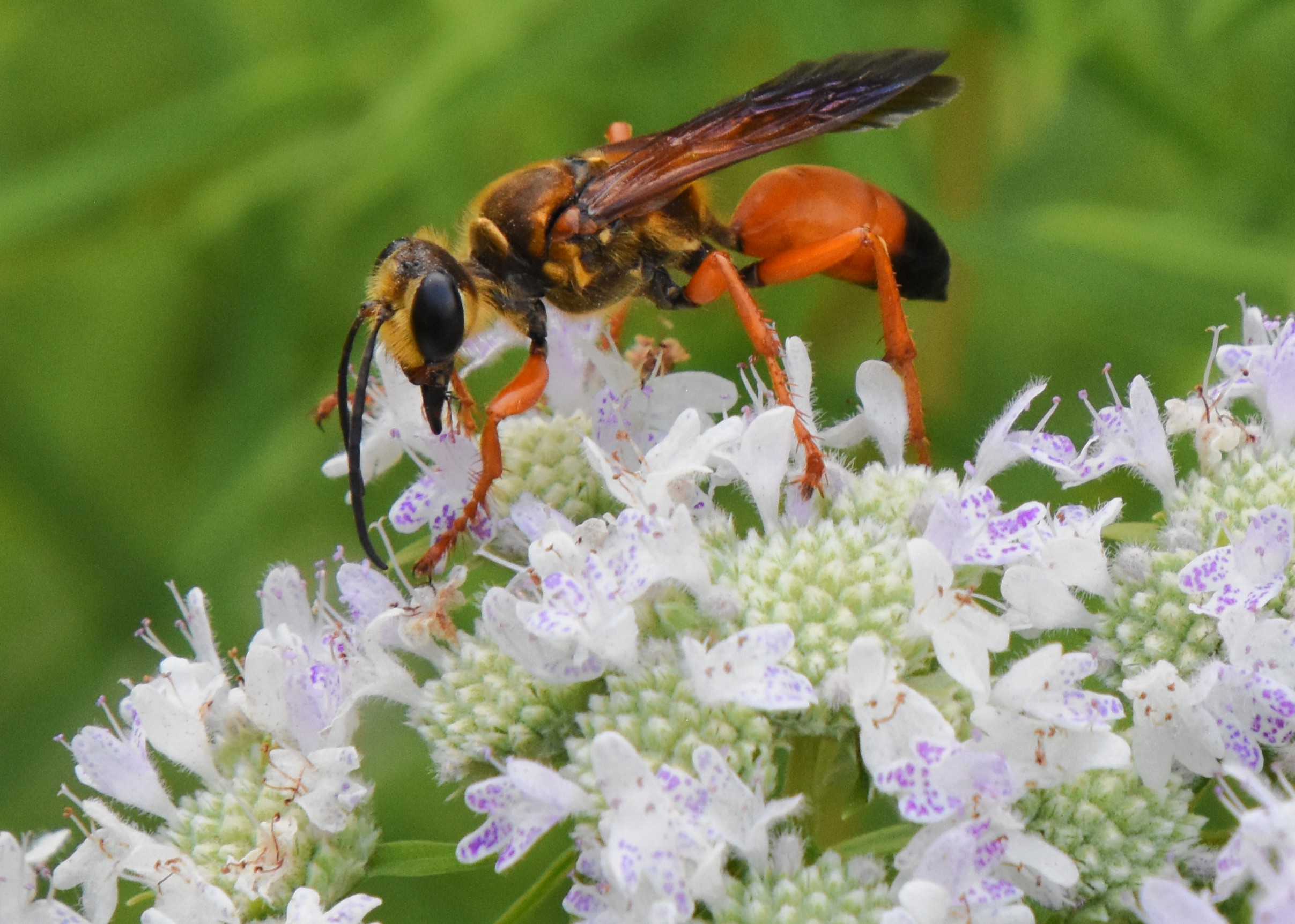
(Photo and article by Anita Fernandez)
A large flying insect with a thin “waist” might signal a potentially aggressive social wasp, but these wasps are anything but aggressive. The only reason you should fear a Great Golden Digger Wasp is if you happen to be a cricket, grasshopper, or katydid, as the adult females will inject these insects with venom to provision their young. Like many solitary Hymenoptera (the order that contains bees, wasps, and ants) the female Great Golden Digger Wasp digs a nest in the ground, complete with individual chambers for each egg. They then go on the hunt for prey to bring back and leave for the larvae to eat once the eggs hatch. As adults, both females and males feed from nectar at flowers. Great Golden Digger Wasps seem to feed frequently from mountain mint if available (as pictured). Not only do they remove species that gardeners often find to be pests, but they also help to aerate soil and improve water drainage through nest digging, and aid in pollination. These wasps have a dark head and thorax, partially covered with a golden “fuzz” of hairs. They have an elongated abdomen that is reddish-orange with a black tip and orange legs. The females are larger than the males and can reach up to 1 ½ inches in length. With a limited amount of venom, female Great Golden Digger Wasps use this resource to find prey for their young. They will not use it in defense except as a last resort, so enjoy them among the flowers for both their form and function, photograph them, and do not handle them.