
(Photo and article by Anita Fernandez)
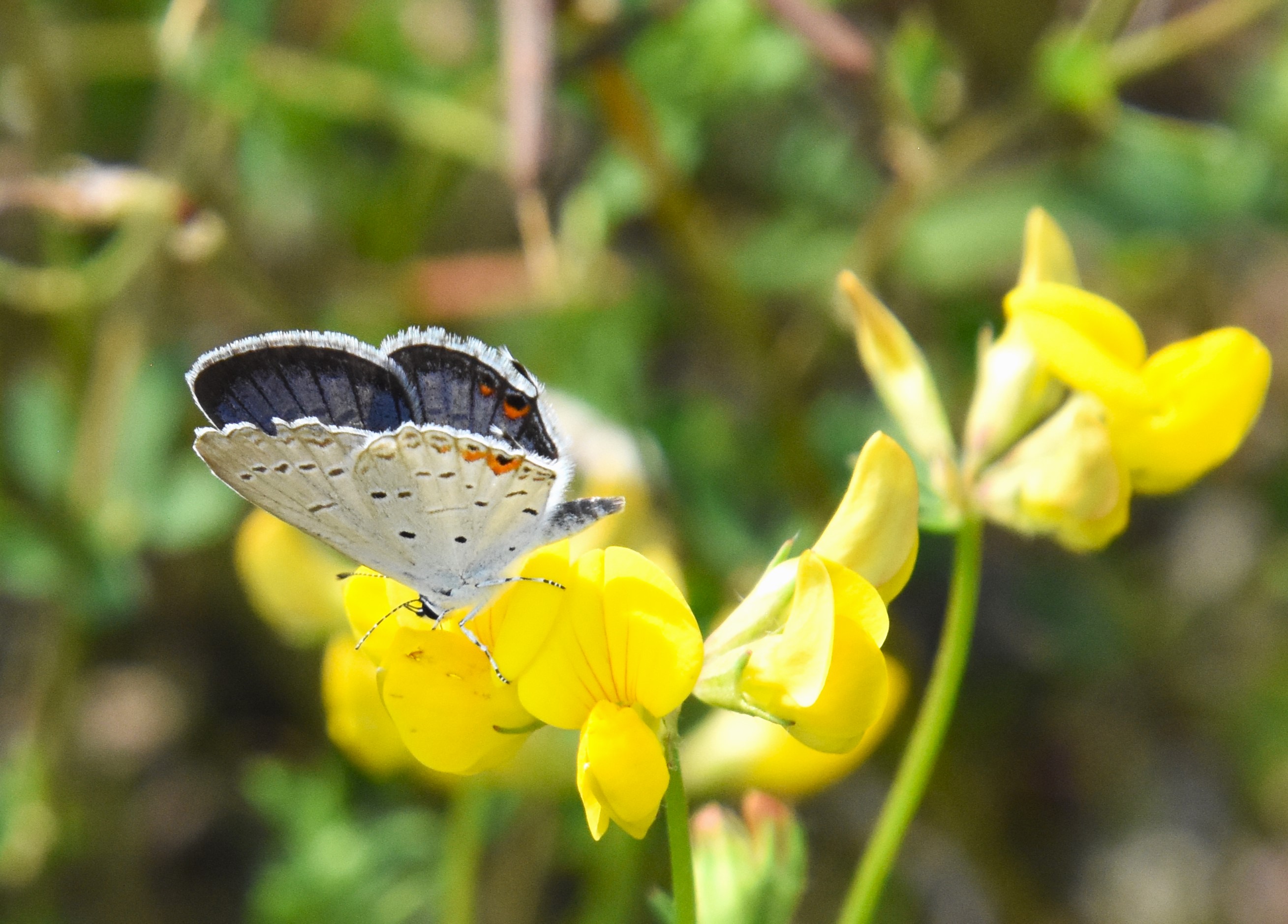
Moving into September, mornings become a little crisper, and areas of the state are already seeing leaves changing. This is also the time when we see less butterfly species. Although some can be seen into autumn, most species have “wrapped up” their flight periods by August. And considering this year has been lower in both species and individual butterflies seen throughout the state (see results from the Third Annual Capitol Area Butterfly Survey), spotting this Eastern-tailed Blue at the McLane Center was a treat. This is one of the smallest butterfly species in North America, its open wingspan stretching only ¾ to 1 inch. In the photo above you get a glimpse of the blue coloration on the upper (dorsal) side of the butterfly that gives it its name. It also sports delicate “tails” on its hindwings that act as a predator distraction, but they can easily be worn off. You can see them in the above photo, small dark filament-like protrusions extending off the hindwings near the lower orange chevron, likely blown up by the wind. These tails, when present, help to distinguish them from other very similar species, such as the Silvery Blue, or the Spring, Northern Spring, or Summer Azures. Although all butterfly species have specific flight periods, you can glimpse this diminutive butterfly flying as early as May and into September. Don’t look up though, the Eastern-tailed Blue typically flies close to the ground, landing on low flowers.
 Perhaps one of the most interesting behaviors this species engages in is during its larval (caterpillar) stage. The Eastern-tailed Blue caterpillar feeds primarily on legumes in the Pea (Fabaceae) family. Because these plants are also frequented by ants, the caterpillars engage in myrmecophily. The Eastern-tailed blue larvae secrete a sweet, protein-rich liquid from their abdomens called “honeydew,” a substance that ants feed on. In return, the ants help protect the caterpillars from predators, like aphids. This is an example of mutualism, a type of symbiosis in which both species derive a benefit. There is even some evidence that the ants may transport the caterpillars into their nests to pupate, providing even more protection during the Eastern-tailed Blue’s vulnerable and inactive stage of metamorphosis.