
(by Pam Hunt)
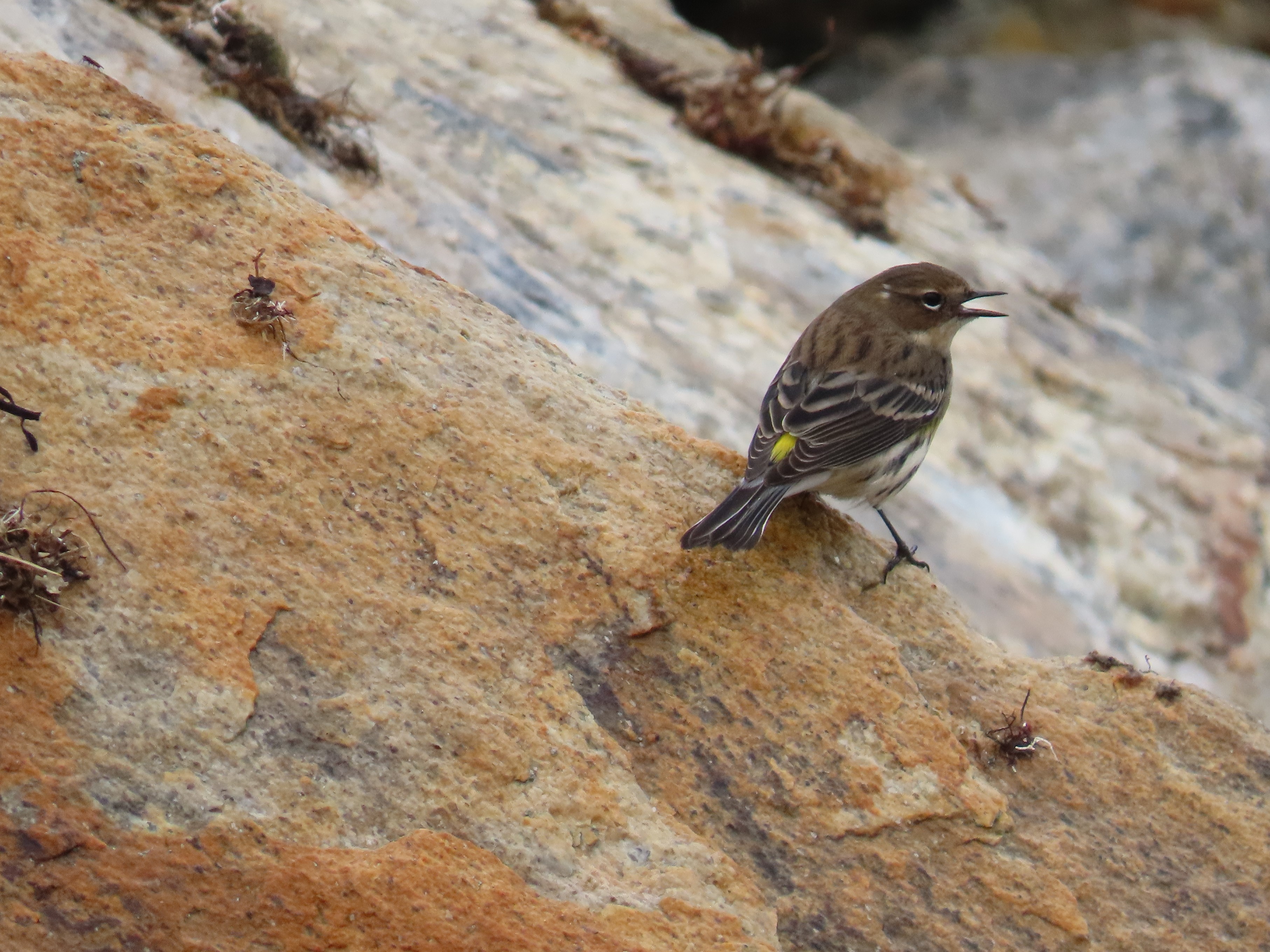
As fall shifts from September to October, the predominant migrant birds we see in New Hampshire shift from warbler to sparrows. Among the notable exceptions to this tendency is the Yellow-rumped Warbler, also affectionately known as the “butterbutt.” This is by far our most common late-season warbler, with individuals lingering into November in most years and sometimes even spending the winter along the coast. They survive cold northern winters by shifting their diet from insects to fruits, particularly the waxy berries produced by bayberry. As fruits get depleted, the warblers can continue moving south, a phenomenon known as “facultative migration.”
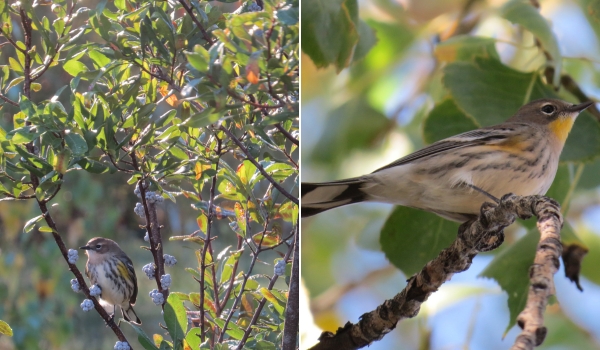
Their affinity with bayberry is the source of an alternate name for the species: “Myrtle” Warbler (bayberry is also called wax myrtle). This form was considered a separate species until it was “lumped” with the western “Audubon’s Warbler” several decades ago because the two groups hybridize in the mountains of western Canada. More recent research, however, suggests they may be distinct species after all, and that there’s even a third likely species restricted to Guatemala. Audubon’s Warbler looks very different from the Myrtle, having a gray head and breast and yellow throat. It is a rare vagrant to New Hampshire, usually in late fall or winter.
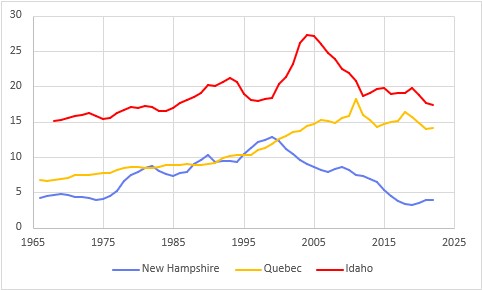
Population trends for the Yellow-rumped Warbler vary considerably across the continent (Figure 1). In New Hampshire and most of the northeastern U.S. populations rose consistently through the late 20th Century but then reversed course and returned to the levels of 50 years ago. While populations elsewhere showed the same initial increase, more recent trends have diverged from the one shown in NH. To our north in Quebec, the increase continued until 2010 and then leveled out, while in the West the shift from increase to decrease occurred around 2005. At least in the northeastern U.S., the increase is widely believed to be a result of increasing habitat: a combination of reforestation and widespread establishment of conifer plantations. Yellow-rumps moved south from Canada to occupy all this new habitat, which makes their more recent decline even more intriguing. This is not the only common species to show this shift around the turn of the century, and investigating possible causes is a worthy area for further research.
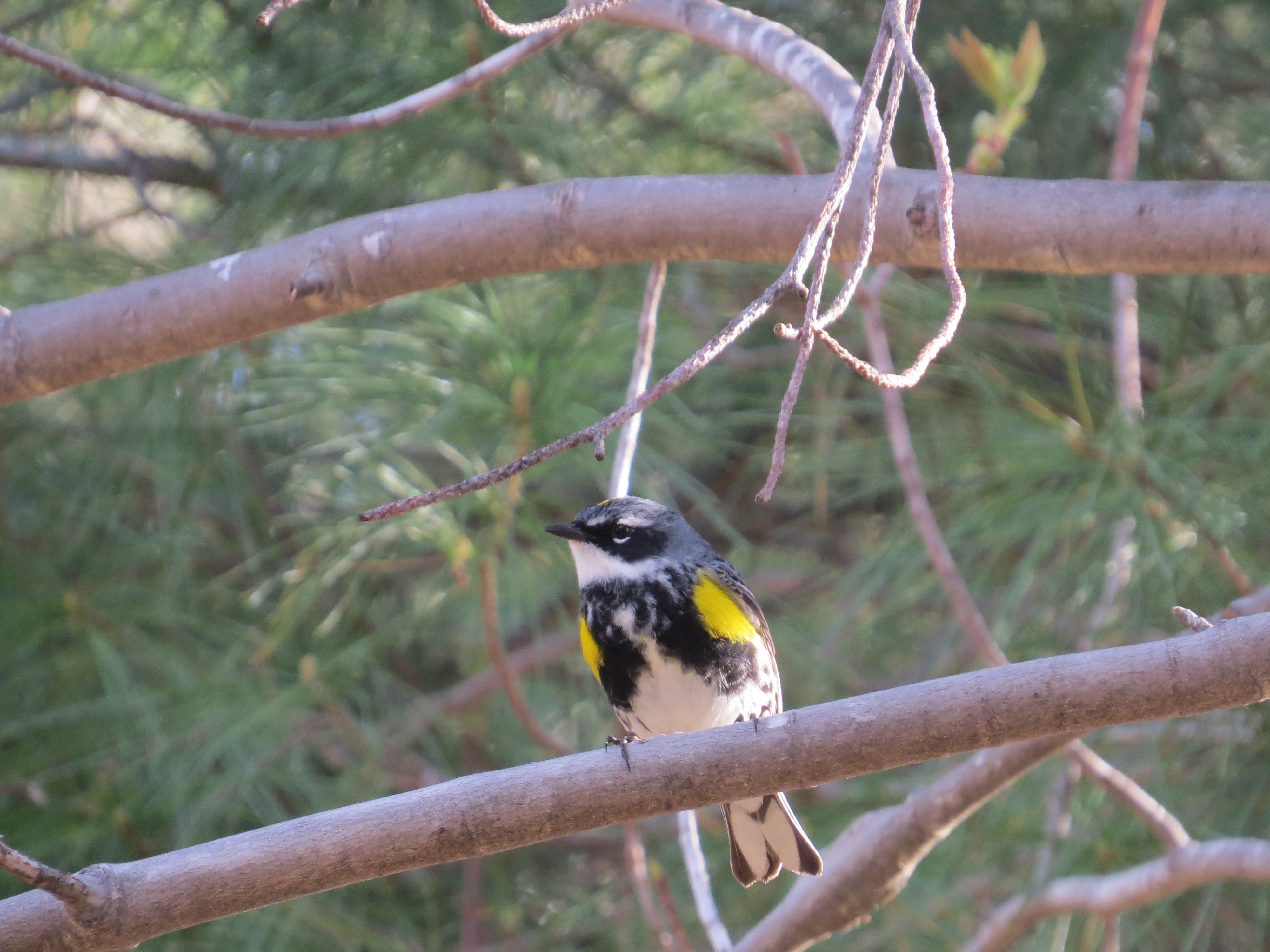
Although they breed primarily in forests with a strong conifer component, Yellow-rumps are commonly found in edges and thickets in fall or winter, often in the company of chickadees, kinglets, sparrows, and a few other late warblers (e.g., Palm Warbler). They are versatile foragers, and you may see them doing everything from flycatching to feeding on bayberries and other small fruits. Sometimes they will even come to feeders and eat suet. Watch for them again in late April as they lead the vanguard of returning spring warblers, now molted into their more distinctive breeding plumage – but they’ll always be “butterbutts!”
State of the Birds at a Glance:
- Habitat: Forests, Shrublands
- Migration: Short-distance
- Population trend: Stable
- Threats: Predation, collisions, habitat loss
- Conservation actions: Maintain a bird-friendly yard
More information on “The State of New Hampshire’s Birds” is available here. Full species profiles in the format of “Bird of the Month” are now available here.