
(by Pam Hunt)
For the second installment of this winter’s “Focus on Finches,” I bring you one of my favorite birds, the Evening Grosbeak (Coccothraustes vespertinus). When I was growing up in upstate New York, this large colorful visitor from the north was one of the most abundant birds at our feeders, so much so that I even did a little study of their numbers as a high school project.
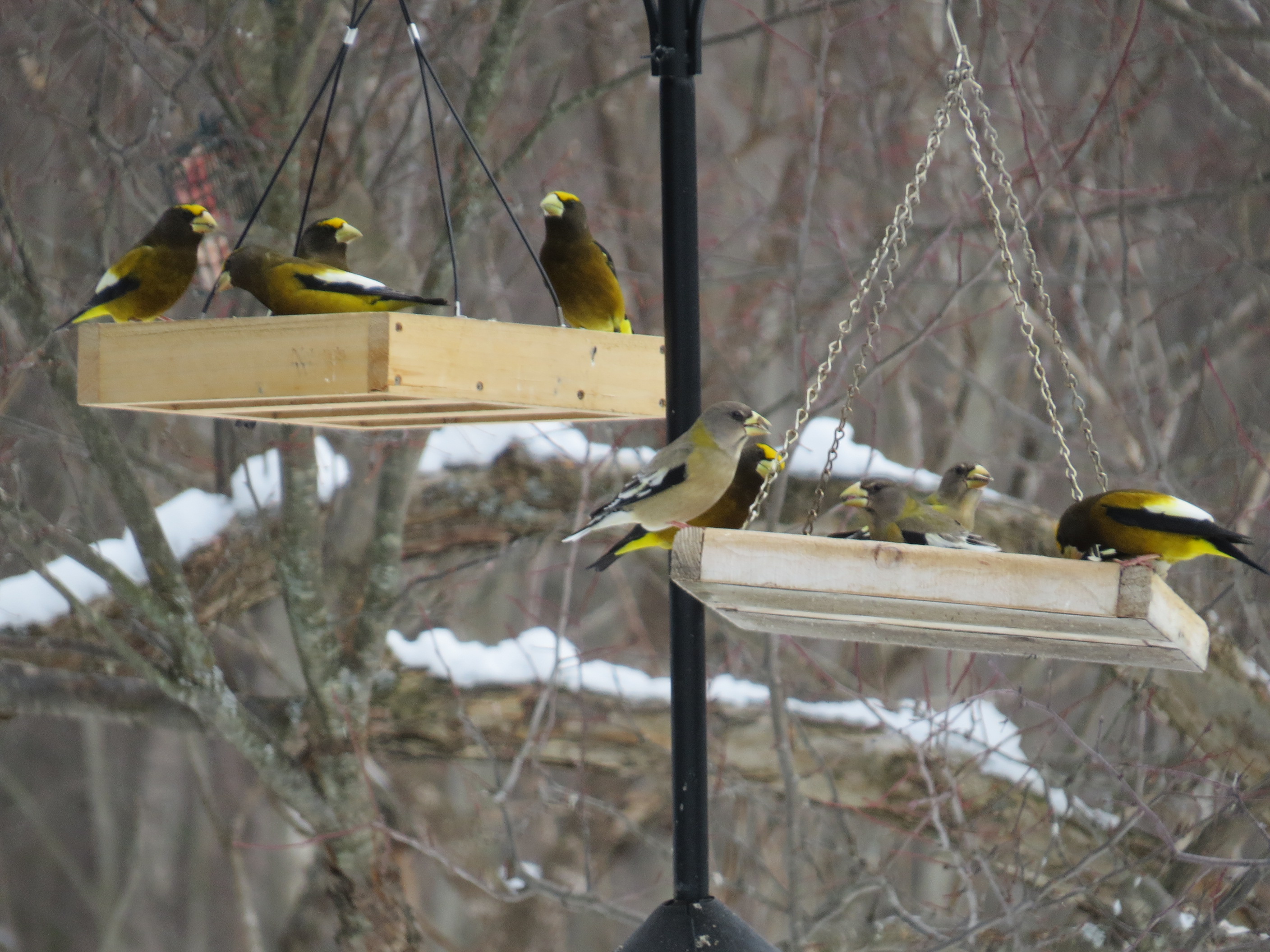 But this hadn’t always been the case. Prior to the 1900s, the Evening Grosbeak was rare in the east, but over time it gradually expanded from the Rocky Mountains and first bred in New England in the 1920s. By the 1940s and 1950s, it was a reliable winter visitor, with larger numbers roughly every two years, and this pattern continued through the 1980s (Figure 1). Now, as anyone who remembers the invasion years (when grosbeaks descended on feeders by the dozens and cleaned them of sunflower seeds in a matter of hours) will tell you, the species has become extremely hard to find.
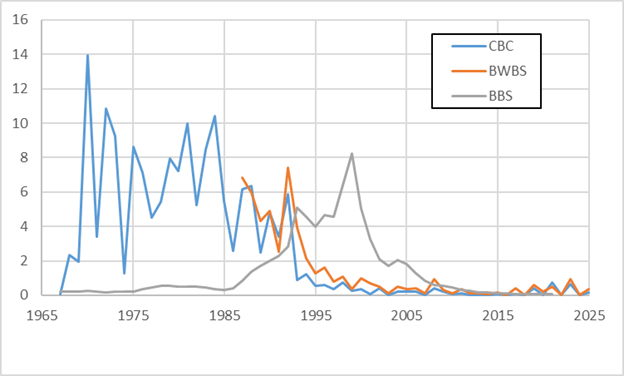
The Evening Grosbeak’s heyday in the Northeast, which lasted roughly from 1950 to 1990, coincided with a large outbreak of spruce budworm in eastern Canada. The caterpillars of this moth feed on spruce and fir and can severely impact forests at high infestation levels. During these periods, several species of birds, including the Evening Grosbeak, capitalize on the abundant food and produce more young (see also our Bird of the Month on Cape May Warblers). But as the outbreak wound down, the grosbeaks lost an abundant source of food and their populations declined or shifted west. Thus, while local breeding populations persisted for another decade (Figure 1), the huge winter numbers became a thing of the past in the absence of a large population to our north.
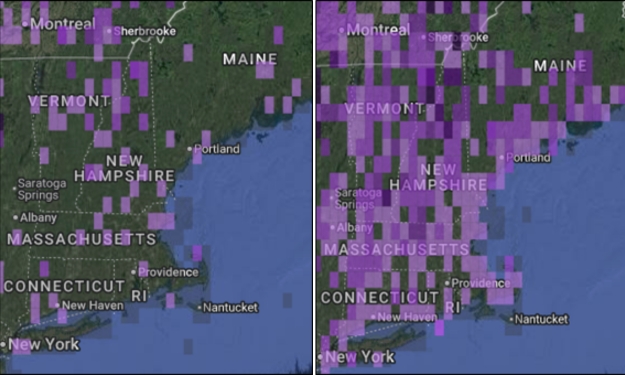
Budworm operates on roughly a 40-year cycle, however, and in the early 2000s, a new outbreak started in southern Quebec. Shortly thereafter, the number of grosbeaks visiting New Hampshire started to grow again. You can see the early signs of this in Figure 1, and while we’re still a long way from the numbers during the last outbreak, there are signs that there are more grosbeaks to come. Remember that peaks occur every other year, so there will still be winters when grosbeaks will be extremely hard to find. Signs in the fall of 2025 suggested that this winter would be a relatively good one for the species, with higher-than-average numbers in both October and November (Figure 2). At present, the largest flocks are still north of the White Mountains, where there are scattered reports of over 100. Numbers in southern NH were gradually building in December, mainly in the southwest, with mostly single birds south and east of Concord. With luck, grosbeaks will continue moving south and grace more feeders by the time the Backyard Winter Bird Survey occurs in early February.
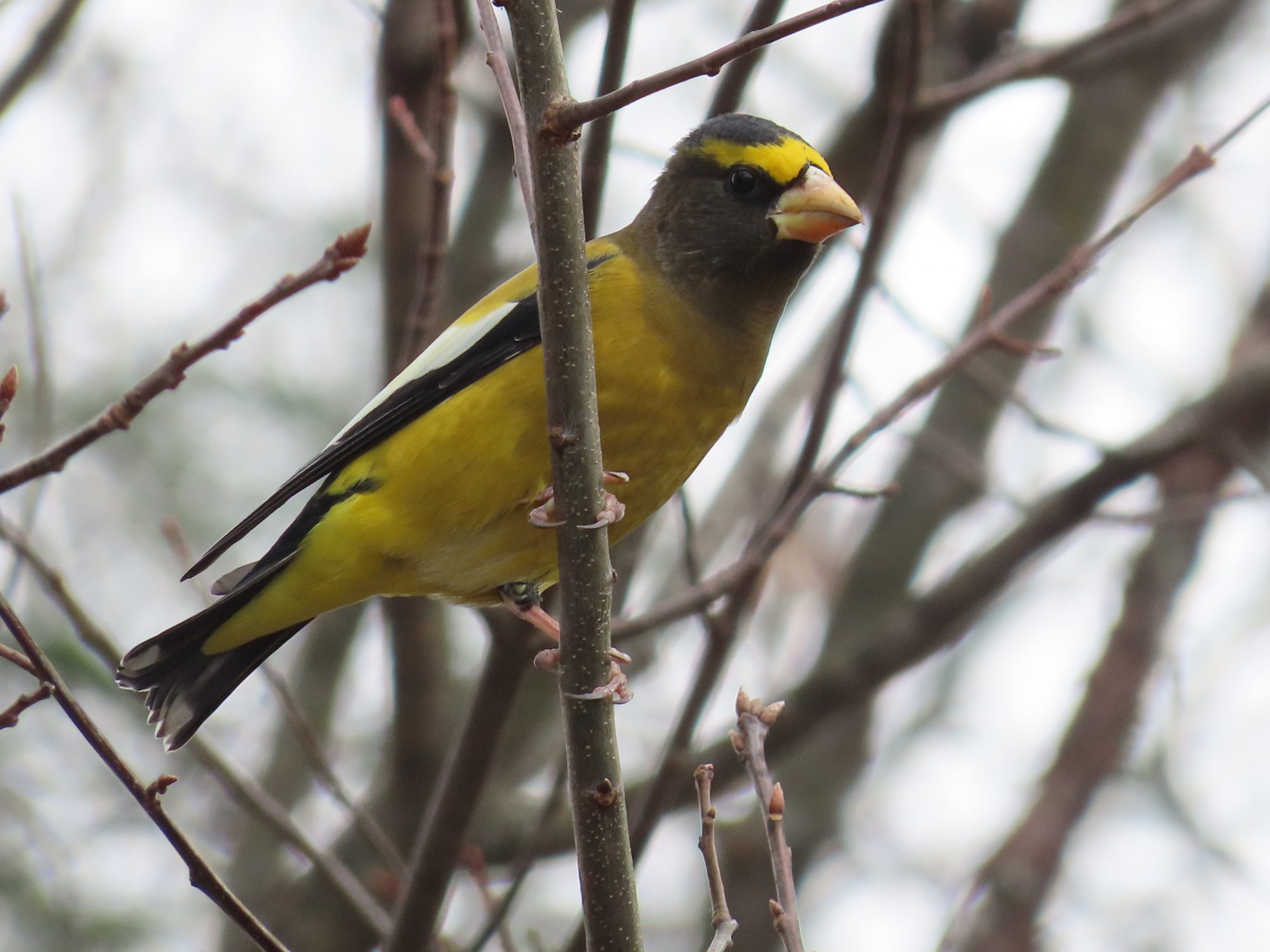 Despite the signs of growing populations to the north, Evening Grosbeaks remain rare as a breeding bird in New Hampshire, with most records in the far north and a few in the southwest. The species is secretive when nesting, so very little is known about its breeding biology. For a long time, it wasn’t even clear if the species had a song, and the one that exists is not much more than a glorified version of the more familiar raucous calls heard at winter bird feeders. Even the name stems from the misconception that the bird only came out of the woods to sing at dusk.
State of the Birds at a Glance:
- Habitat: Forests, Developed Areas
- Migration: Short Distance
- Population trend: Declining
- Threats: Prey Declines
- Conservation actions: More data are needed on population trends and the magnitudes of threats.
You can help collect valuable data on Evening Grosbeaks and other winter birds by participating in NH Audubon’s “Backyard Winter Bird Survey.” The survey will occur on February 14-15, 2026. Visit here for details.
More information on “The State of New Hampshire’s Birds” is available here. Full species profiles in the format of “Bird of the Month” are now available here.