
(by Pam Hunt)
Forget robins – one of the surest signs of spring in New Hampshire, at least among birds, is the arrival of your local Eastern Phoebe. Given its proclivity for nesting on buildings, the Eastern Phoebe is the most familiar flycatcher in New Hampshire. Many homeowners are well-acquainted with the species from nests found on top of light fixtures, on beams in sheds, or under eaves, and it just as often uses bridges. They can be incredibly tolerant of disturbance, only flying off their mossy nests when people get extremely close. Even then they’re likely to stay nearby until the coast is clear, wagging their tails and uttering their signature “fee-bee” the whole time.
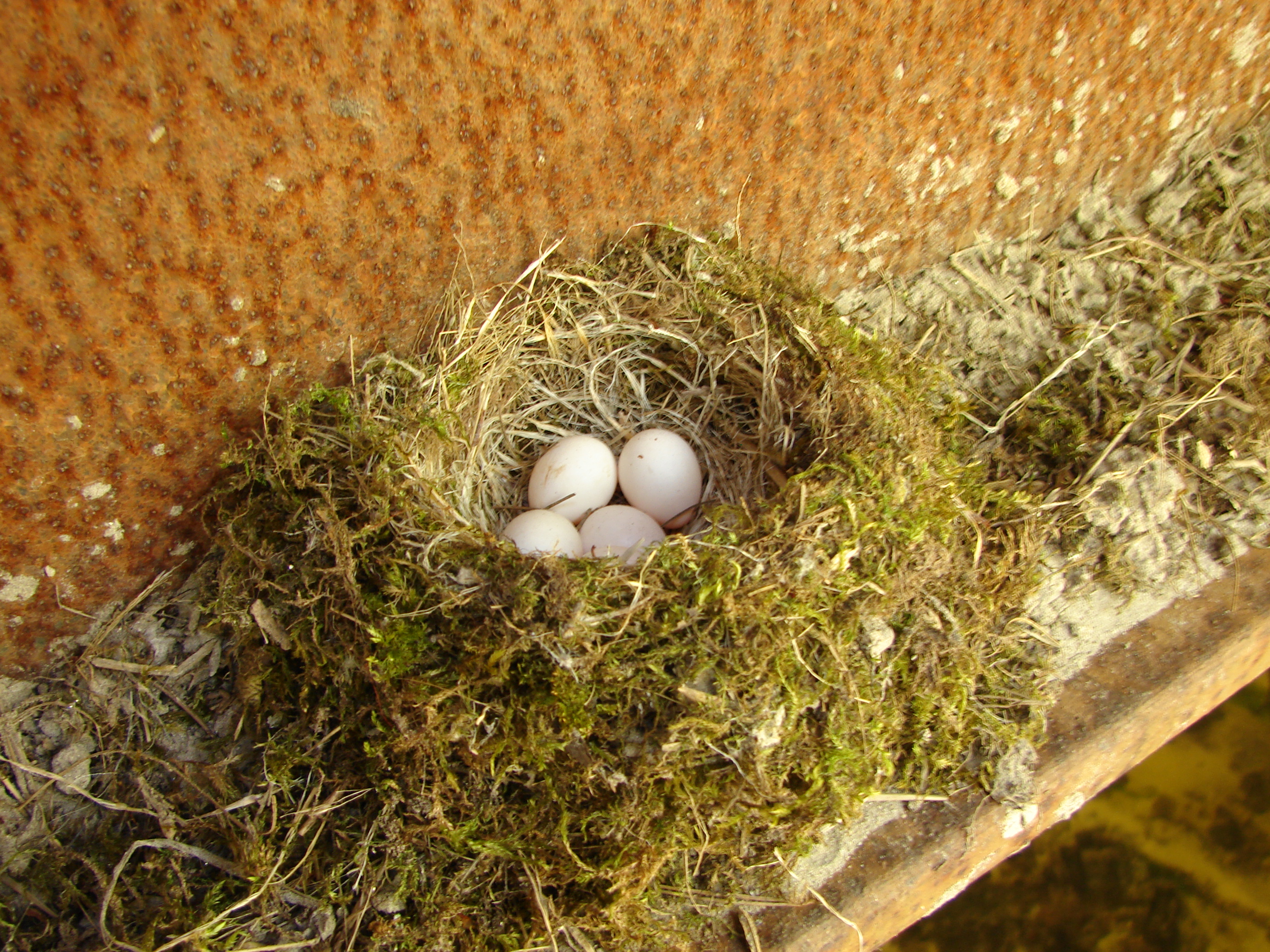 But what did phoebes do before people built structures for them to nest on? They can best be characterized as “niche nesters,” meaning they build their nests in small, enclosed spaces with a roof – but not in cavities. Natural sites include cliffs, caves, and upturned tree roots, and such locations are still used regularly. It’s suspected that the Eastern Phoebe’s distribution was historically limited by the availability of such natural substrates, and it only expanded westward into the Great Plains along with the proliferation of buildings and bridges.
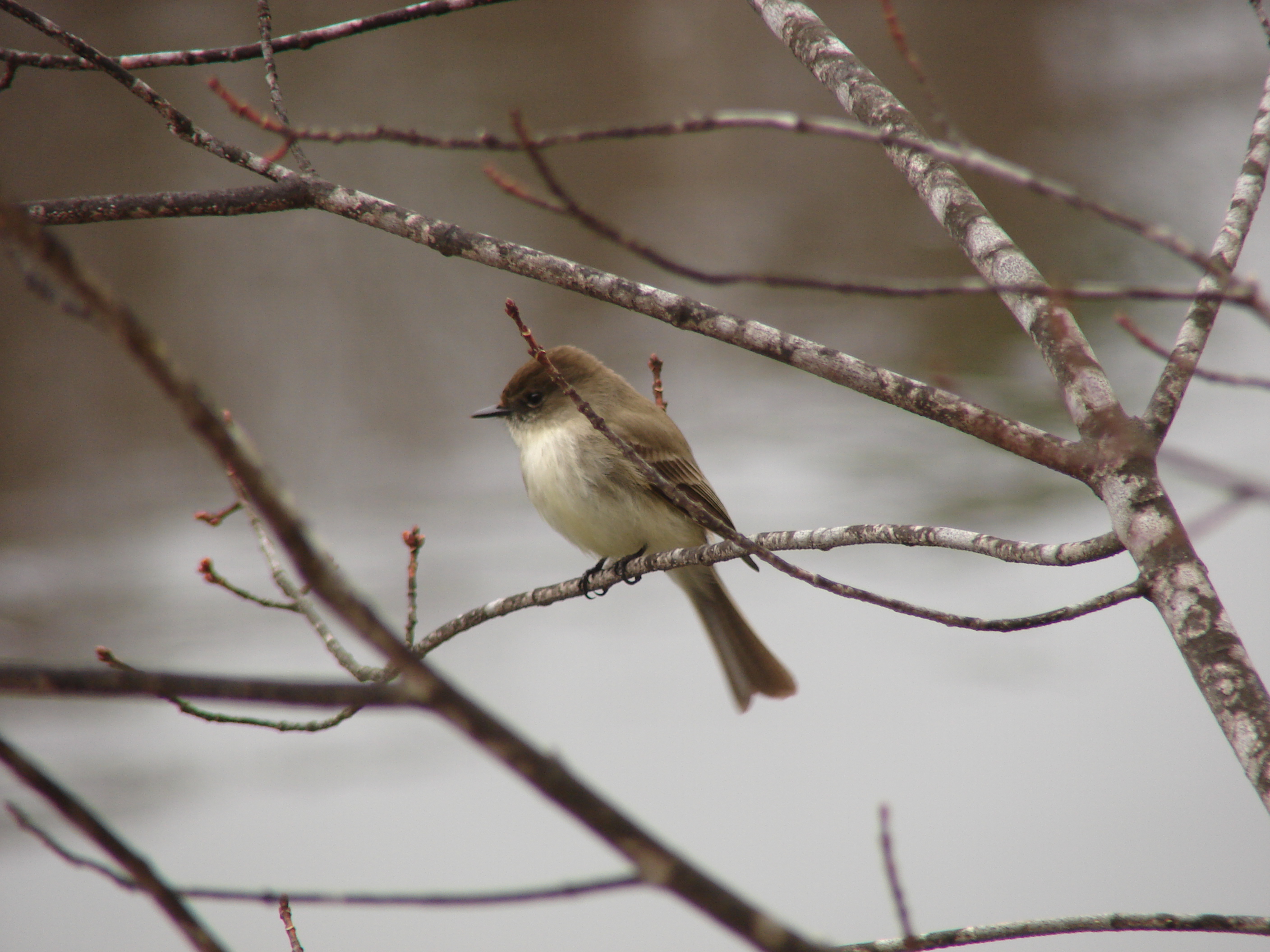 Eastern Phoebes winter primarily in the southeastern United States, which puts them much closer to their breeding grounds than other flycatchers. As a result, they are among the first songbirds to return to New Hampshire in spring, usually arriving by the middle of March (late March in the northern half of the state). This also allows them to produce multiple broods, ensuring a steady supply of young phoebes in suburban yards.
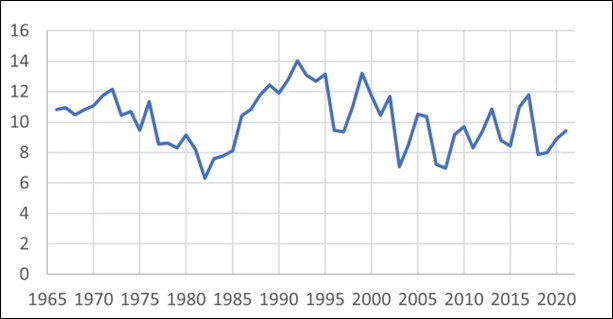
If there is a downside to their northerly winter range and early spring arrival, it is that phoebes are more vulnerable to the vagaries of the weather than many other migrants. Cold snaps in the south and spring snowstorms both have the potential to suppress insect supplies. Phoebes can eat fruit as well, but there aren’t usually many berries available in March and April to sustain them, and under such adverse conditions many do not survive. This variable risk of mortality is probably one reason phoebe population trends fluctuate so much. Numbers will be low after a harsh non-breeding season, only to rebound thanks to high productivity. As a result, the population is best described as stable.
State of the Birds at a Glance:
- Habitat: Lakes and Rivers, Developed Areas
- Migration: Short Distance
- Population trend: Stable
- Threats: Predation, Collisions, Pollution
- Conservation actions: Maintain a bird-friendly yard
More information on “The State of New Hampshire’s Birds” is available here. Full species profiles in the format of “Bird of the Month” are now available here.