
(by Pam Hunt)
If you’re paddling on one of New Hampshire’s rivers or lakes this summer, there’s a good chance you’ll hear the distinctive rattle of the Belted Kingfisher (Megaceryle alcyon). As its name implies, this species feeds almost entirely on fish, which it captures in shallow water. Kingfishers hunt in two ways, either from a perch or by hovering over the water. When a fish is detected the bird dives into the water, grabs the prey with its bill, and then brings it back to a perch to swallow whole. Because they are visual predators, kingfishers are not often seen near muddy rivers or areas with waves that make it difficult to see below the surface.
 Belted Kingfishers are cavity nesters, laying their eggs in burrows they dig into vertical banks of sand or dirt. These tunnels are 4-6 feet deep and 3-5 inches in diameter and can often be identified by two slight groves on the bottom of the entrance where the birds’ feet drag as they enter. Historically nesting habitat was limited to eroding banks of rivers and lakes, and less commonly coastal bluffs, but the species adapted well to human modification of the landscape and now also nests in gravel pits and road cuts, sometimes far from water.
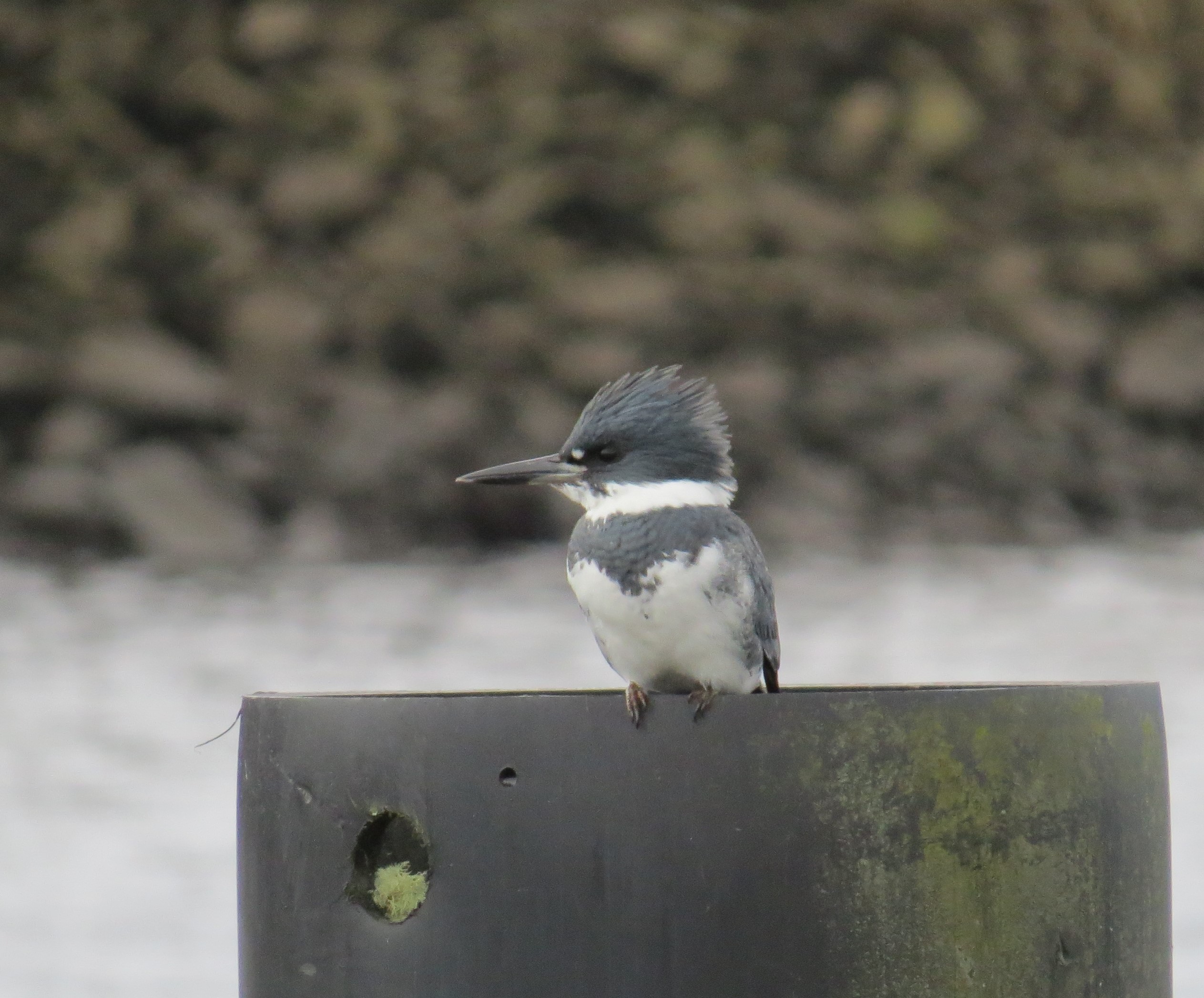
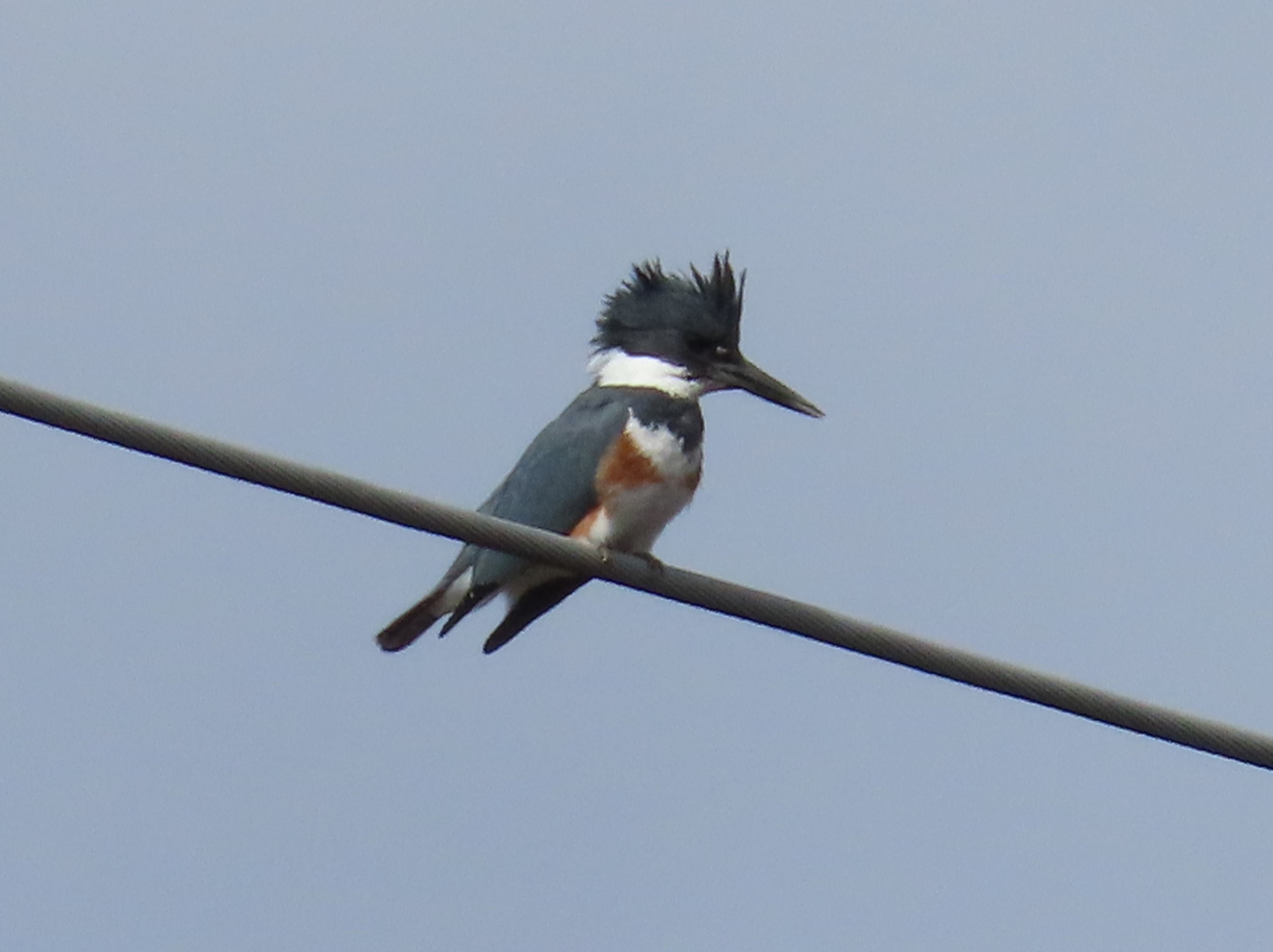 Kingfishers are unusual among New Hampshire birds in that the female is more brightly colored than the male. Both are blue-gray above and white below, sport a distinctive double crest, and have a blue-gray breast band. The female, however, ups the game a notch with the addition of rusty flanks that merge to form a second breast band below the gray one. It is not clear why such “reverse sexual dimorphism” occurs in this species, but it is also seen in other members of its genus such as the Ringed Kingfisher that occurs in southern Texas.
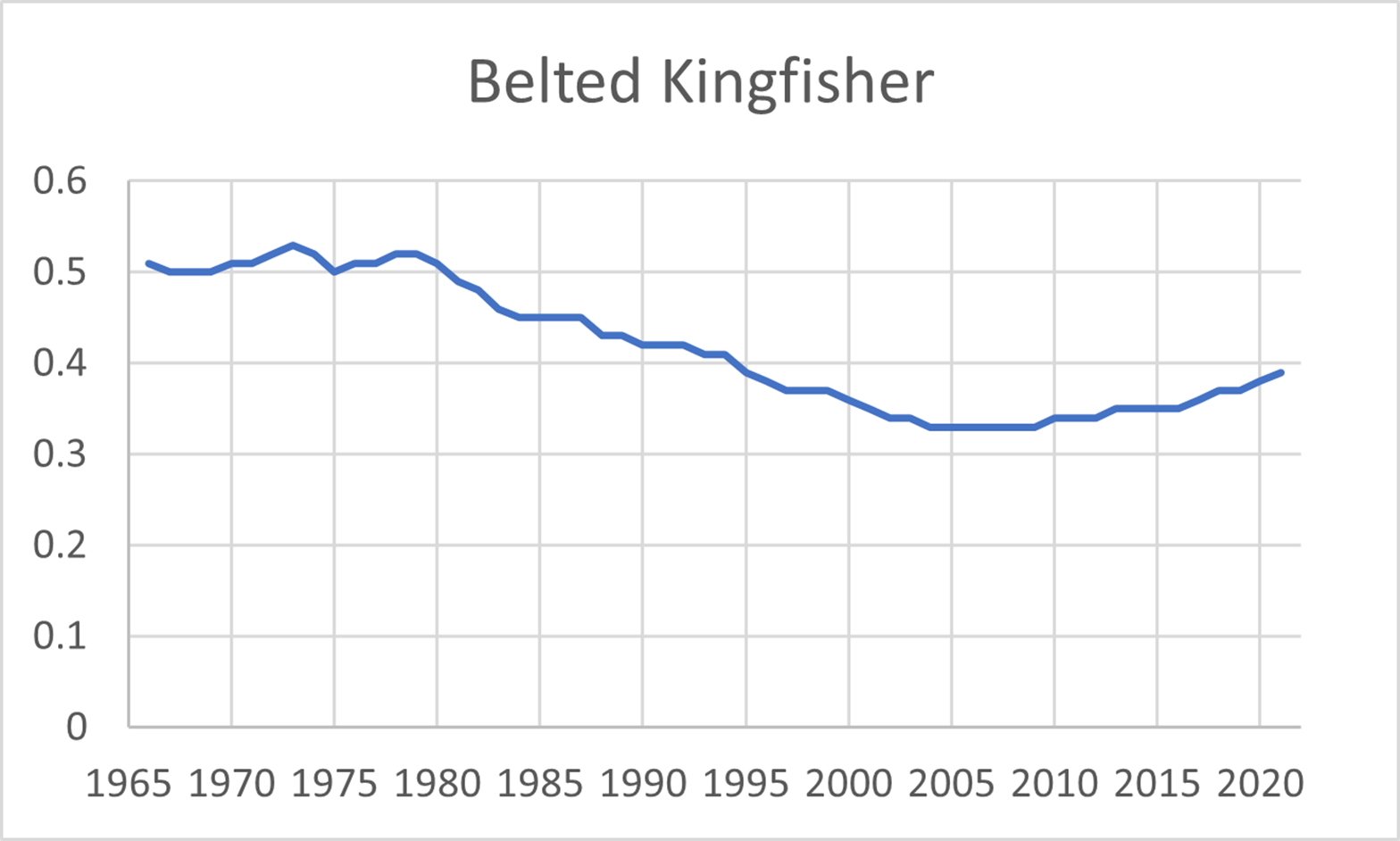
Kingfisher populations have been in slow decline for decades, but there are no clear explanations for this trend. It’s been speculated that contaminants such as DDT and PCBs could be a factor, as has been demonstrated for other fish-eating birds, but levels of these toxins in kingfishers have been low where tested. Historically the species was persecuted at fish hatcheries, but this is far less common now. Given their nesting habitat, a third possibility is that bank stabilization along rivers is reducing the extent of eroding banks in which to nest, as has been documented for Bank Swallows in some areas. There is clearly much to learn about some aspects of Belted Kingfisher ecology as it relates to conservation.
State of the Birds at a Glance:
- Habitat: Lakes and rivers
- Migration: Short-distance
- Population trend: Declining
- Threats: Poorly known, but may include habitat loss and contaminants
- Conservation actions: More data are needed on nature and magnitude of threats
More information on “The State of New Hampshire’s Birds” is available here. Full species profiles in the format of “Bird of the Month” are now available here.