
(by Pam Hunt)
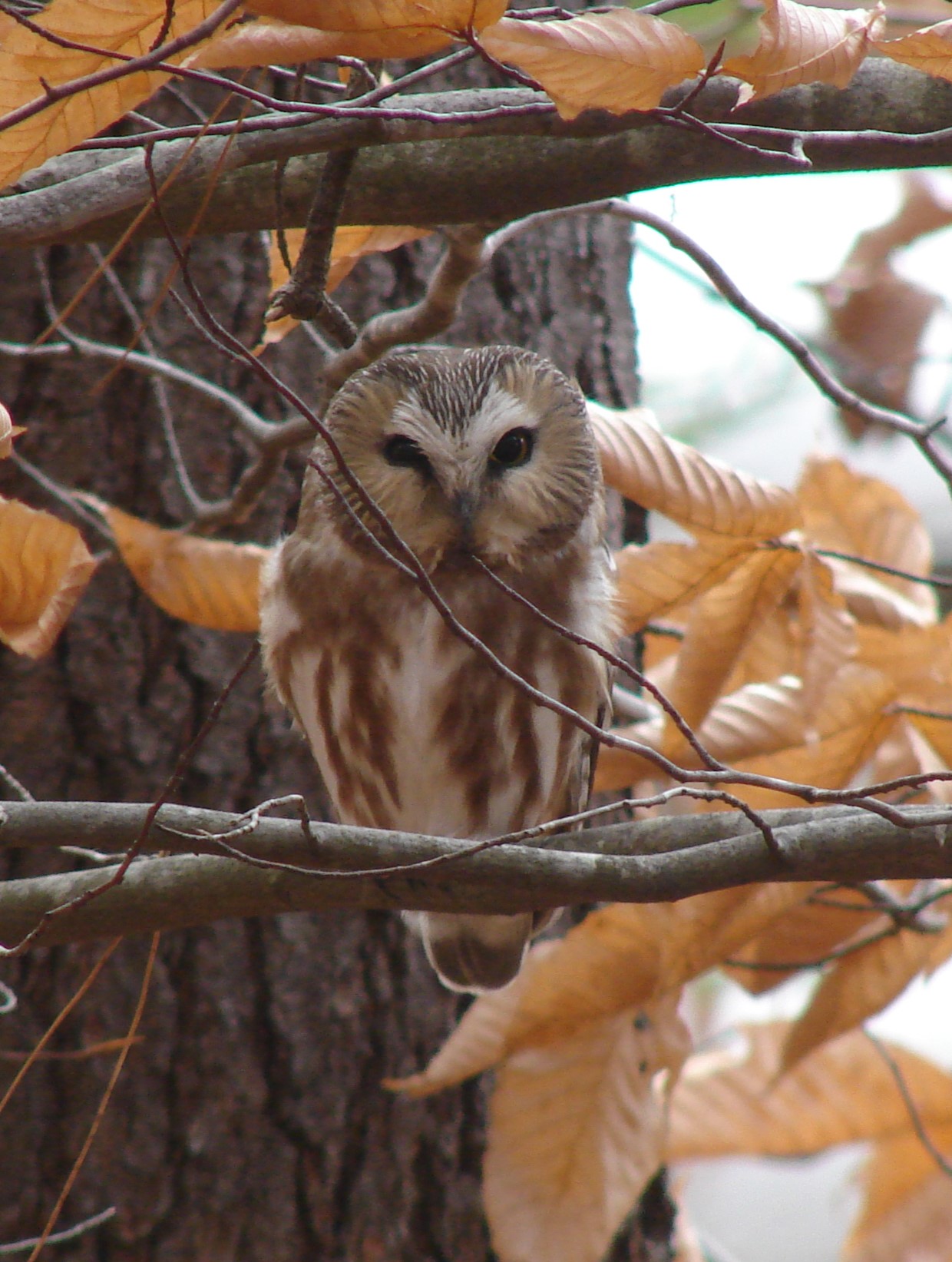
As the days warm and lengthen in March, all sorts of migrants are starting to move north into New Hampshire. We’re used to things like waterfowl, woodcock, and Red-winged Blackbirds fitting into this “early migrant” category (but maybe less so after this cold and snowy winter), but there’s another species moving through undetected – unless you know when to look. The bird in question is the Northern Saw-whet Owl (Aegolius acadicus), the smallest member of its family in New Hampshire – these tiny predators weigh less than half an ounce (a little bigger than a robin). Although saw-whets occur throughout the state year-round, some likely leave in the fall while others arrive from farther north. Peak times to find this small owl away from breeding areas are in October-November and February-March. Numbers of migrants vary considerably from one year to the next, probably because of variation in prey populations on the breeding grounds. To better track numbers and seasonality of migrants, ornithologists have established banding stations specifically for this species across a wide portion of its range (see https://www.projectowlnet.org/), including two in New Hampshire.
Because of their size and secretive nature, the saw-whet may be the hardest to see of New Hampshire’s regularly occurring owls. They tend to roost in dense vegetation and are thus not easy to find during the day, the exception being if one is found by a scolding mob of chickadees and titmice. Instead, you have to listen, and even then the species can be tricky. Although their monotonous “tooting” whistle is distinctive, this is but one of many calls, and this tiny owl is just as likely to utter any number of short squeaks, squawks, and hisses that are sometimes hard to tell from creaking trees or small mammals. Patience is also required, since saw-whets often only call a couple of times in response to a recording or imitation, even though they may have flown in and be sitting a few dozen feet away. The best time to hear the male’s tooting call is from late winter to May, when it is used to set up a territory.
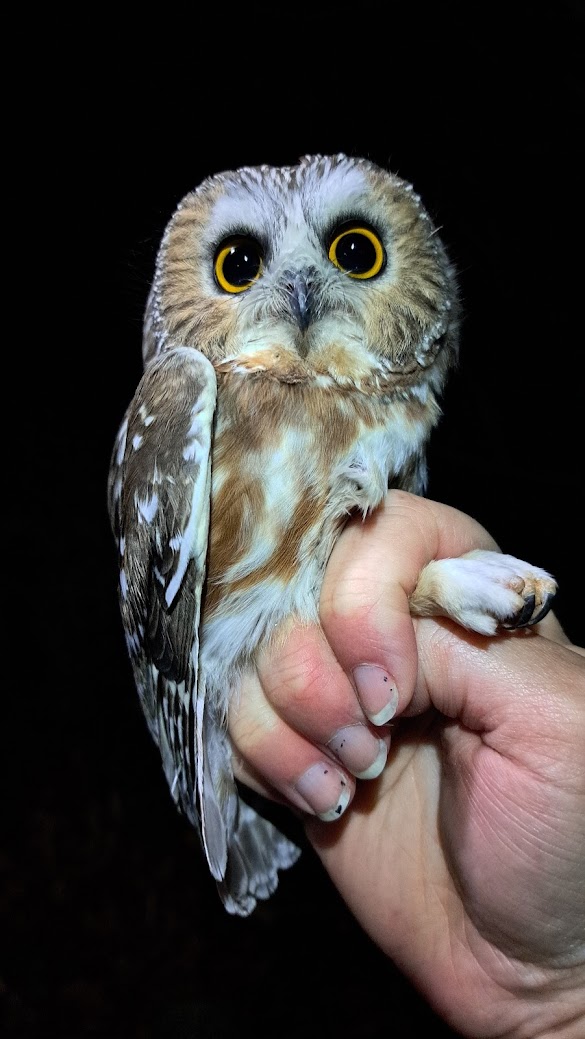
Save for the pervasive threat of habitat loss, no major conservation issues have been identified for Northern Saw-whet Owls. Even habitat loss might not be a major concern in a heavily forested state like New Hampshire. Although not studied, an additional concern is that anticoagulant rodenticides could impact saw-whets, as is also speculated for other rodent-eating raptors. Much would depend on how frequently these tiny owls encounter mice that have been exposed to the rodenticides. These owls’ secretive nature, highly nocturnal habits, and irregular migration patterns make it extremely difficult to estimate population sizes, much less trends, but except at the southern edge of their range in the central Appalachians the species is not considered to be of conservation concern.
State of the Birds at a Glance:
- Habitat: Forests
- Migration: Short Distance
- Population trend: Uncertain
- Threats: Habitat loss, possibly contaminants
- Conservation actions: Maintain a bird-friendly yard
Want to hear more about Northern Saw-whet Owls? This past fall, the Something Wild team visited the Black Mountain Banding Station to learn about Northern Saw-whet Owls, listen along.
More information on “The State of New Hampshire’s Birds” is available here. Full species profiles in the format of “Bird of the Month” are now available here.