


Native bees and predatory wasps share the same lineage and also share many behaviors and habitat requirements. Predatory wasps feed their offspring invertebrates (insects and spiders) and bees diverged from this carnivorous diet to feed their offspring plant-based food (pollen and nectar). Flower-rich landscapes provide critical habitat for both adult bees and wasps because they each consume flower nectar; in addition, wasps need diverse, flower-rich landscapes to hunt for their prey. Heather will highlight many amazing natural history and biology facts about native wasps illustrating their nesting habitat, prey specificity, and the ecosystems services they provide—pest insect population control and pollination.
Register for this free webinar through Zoom.

This webinar is part of the year-long Exploring Connections to and Stewardship of the Natural World talks. This series is supported by a grant through the NH Humanities Council and aims to provide a public and personal space for the examination of environmental ethics, fostering a deeper understanding of, appreciation for, and care of, our natural world. Programs are free to the public, and streamed via Zoom, YouTube, and Facebook Live.
For more information and to see the entire slate of talks, visit our series webpage.
Speaker Bio:
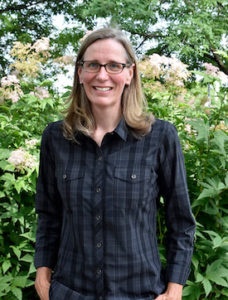 Heather Holm is a biologist, pollinator conservationist, and award-winning author. In addition to assisting with native bee research projects, she informs and educates audiences nationwide, through her writing and many presentations, about the fascinating world of native pollinators and beneficial insects, and the native plant communities that support them. Her first book, Pollinators of Native Plants, was published in 2014, and her second book, Bees, published in 2017, has won six book awards including the 2018 American Horticultural Society Book Award. Her forthcoming book, Wasps, will be available in January 2021. Heather’s expertise includes the interactions between native pollinators and native plants, and the natural history and biology of native bees and predatory wasps occurring in the Upper Midwest and Northeast.